Muslim Magomayev: the Voice That Defined an Era
 |
16 December 2025
|
16 December 2025
Muslim Magomayev remains one of the most iconic cultural figures of the Soviet Union and Azerbaijan — a singer whose voice transcended genres, borders, and generations. Possessing a rare combination of operatic power, lyrical sensitivity, and natural charisma, he became a symbol of artistic excellence and emotional depth for millions of listeners across the USSR.
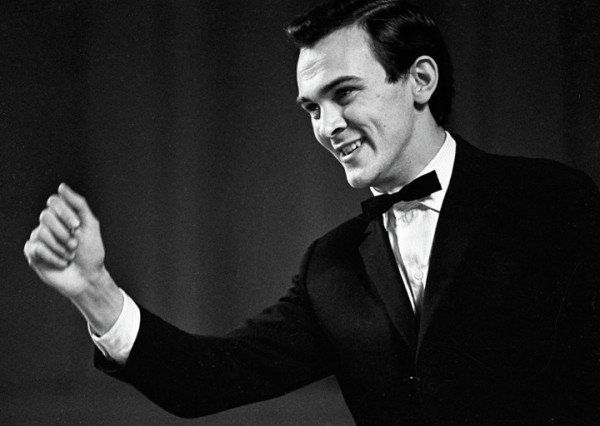
Born in 1942 in Baku into a family deeply connected to music and art, Magomayev seemed destined for the stage. His grandfather, also named Muslim Magomayev, was a prominent Azerbaijani composer, and this artistic legacy played a crucial role in shaping the young performer’s path. From an early age, he demonstrated an exceptional vocal range and musical intuition, which later allowed him to move effortlessly between opera, classical romances, and popular music.
Magomayev’s rise to fame in the 1960s was rapid and unprecedented. At a time when Soviet performers were often confined to strict stylistic boundaries, he broke conventions by combining operatic technique with accessible, emotionally rich songs. His performances were equally compelling in grand opera houses and on television screens, where he became a familiar and beloved presence.
One of his most celebrated classical roles was Figaro in The Barber of Seville, which showcased his strong baritone and theatrical confidence. However, Magomayev was not limited to traditional opera. He achieved legendary popularity through his interpretation of the Troubadour in the animated musical Bremen Town Musicians. This role, though lighter in genre, became iconic: his warm, expressive voice gave the character depth and charm, making the songs instantly recognizable and eternally popular across generations.
Beyond specific roles, Magomayev was known for his extraordinary concert repertoire. He performed arias by Verdi and Puccini, Neapolitan songs, Soviet classics, and lyrical ballads, often within a single program. This versatility turned his concerts into cultural events rather than simple performances. Audiences admired not only his voice, but also his refined stage presence and sincere emotional delivery.
In the Soviet Union, Magomayev’s fame was comparable to that of the greatest international stars, yet he maintained a rare artistic independence. He refused to conform fully to commercial expectations, choosing quality and artistic integrity over constant touring. This decision only strengthened his reputation as an artist of principle and depth.
For Azerbaijan, Muslim Magomayev became a cultural ambassador, representing the nation’s musical tradition on the world stage. His success demonstrated how Azerbaijani artistry could resonate far beyond national borders, while his personal identity remained closely tied to Baku and its cultural heritage.
Today, Magomayev’s legacy continues to live on through recordings, archival performances, and the enduring admiration of listeners. His voice is often described as timeless — capable of evoking nostalgia, pride, and emotion even decades after his peak years. Muslim Magomayev was not simply a famous singer; he was a defining voice of an era, whose artistry helped shape the cultural memory of the Soviet twentieth century.

.jpg)




Comments
No comments yet.
Leave a Comment