In April 1920..
Azerbaijan was still an independent state. The Azerbaijan Democratic Republic had existed for only two years, yet in that short time it had established a parliament, a government, and its own national army. Despite internal conflicts and growing external pressure, the country lived with hope for the future.
When the XI Red Army approached Azerbaijan’s northern borders, the situation for the ADR became critical. This was a well-organized and battle-hardened force, forged in the Russian Civil War and accustomed to capturing cities one after another. At that moment, the main forces of the Azerbaijani National Army were stationed in Karabakh, where armed clashes were taking place with local rebel groups and remnants of former imperial troops. As a result, the northern direction was left almost unprotected, allowing the XI Red Army to advance toward the Yalama railway station with the goal of seizing Baku and overthrowing the ADR government.
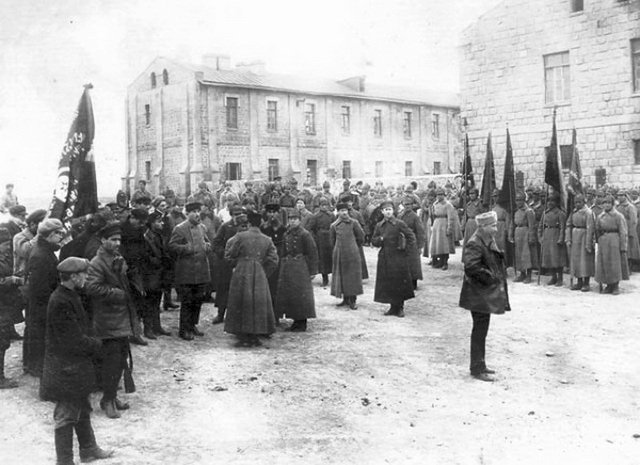
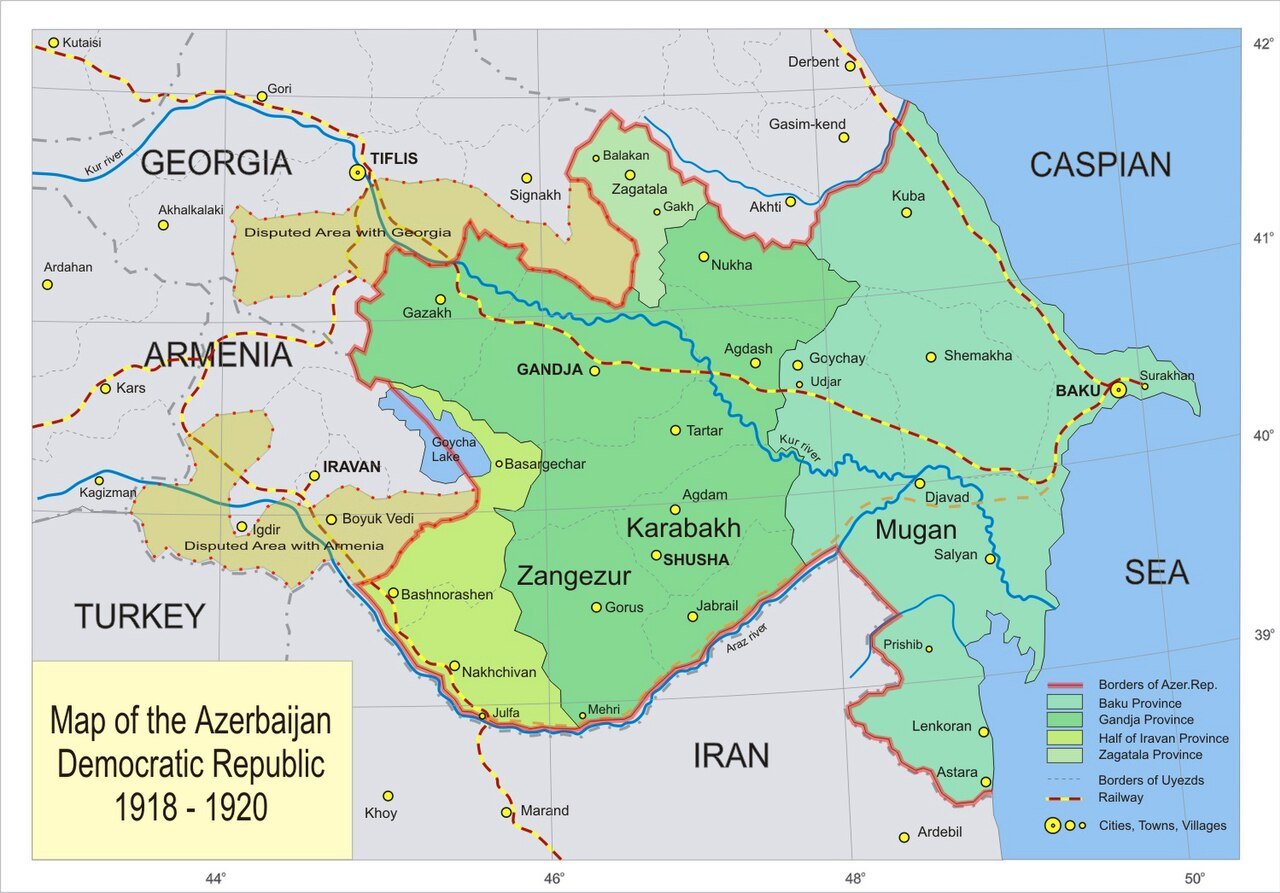
The only place where organized armed resistance was offered was the Yalama station. There, a single infantry regiment of the Azerbaijani Army—just 300 soldiers—stood in the way. These were not legendary figures from history books, but ordinary men—living people who fully understood what was happening and the choice before them. They were not fighting for victory, but for honor, for their state, and for Azerbaijan’s right to be called independent.
Advancing against them were units of the XI Red Army—a massive force whose total strength at that time reached approximately 55,000 troops, supported by artillery and armored trains. Against this overwhelming power, at Yalama station, stood just 300 Azerbaijani soldiers.
They knew there would be no reinforcements. They knew the forces were incomparable. They knew this battle could not be won. Yet they also understood something else: if they did not stand and fight, the road into the heart of the country would be left open without a single shot. Their decision was not a military calculation, but a moral choice.
The battle at Yalama station became one of the most tragic episodes in the history of the Azerbaijan Democratic Republic. Around 300 Azerbaijani soldiers entered an unequal fight against the vastly superior forces of the XI Red Army. According to archival records and eyewitness accounts, all of them were killed.
For this reason, in popular memory, this episode is often compared to the feat of the 300 Spartans at Thermopylae. As in ancient Greece, there was no hope for victory—only the determination to stand in the path of a force marching to destroy a state. The difference was that Yalama had no poets or chroniclers to immediately immortalize the battle.
Over time, a legend of the “300 volunteers” who stood against the Red Army emerged in popular memory. They became a symbol that Azerbaijan’s independence was not surrendered without resistance.
After the fall of the ADR, a long period of Soviet rule began, during which such pages of history were deliberately silenced. The heroism of Yalama’s defenders did not fit the official narrative. Yet their memory lived on—in family stories, in oral history, and in quiet respect and inner pride.
They could not stop the XI Red Army. But they accomplished something that cannot be measured by victories or conquered territories. They proved that even in the face of inevitable defeat, there is a choice—to retreat in silence or to remain in history. In this sense, the 300 warriors at Yalama station became Azerbaijan’s Thermopylae—a place where honor proved more important than the outcome.
Sometimes history is measured not by victories, but by how defeat is faced. And in this sense, the battle of Yalama remains forever one of the most tragic and, at the same time, one of the most heroic pages in the history of Azerbaijan.
Qur’an, Surah 8, Ayah 60
“And prepare against them whatever force you are able, to deter the enemy and defend your land."
Comments (0)
Leave a Comment