When speaking about the history of Azerbaijan, most people recall medieval cities, caravanserais, the Silk Road, or the elegant architecture of eastern khanates. Yet the true roots of this land go much deeper — back to a time when an ancient kingdom flourished here, long before modern borders and nations appeared. It was known as Caucasian Albania.
The name often causes confusion, bringing to mind the Balkans, but this Albania belonged entirely to the Caucasus. It was an early civilization that emerged between the Caspian Sea and the slopes of the Greater Caucasus Mountains, on the territory of present-day Azerbaijan. More than two thousand years ago, it became one of the most important political and cultural centers of the region.
Caucasian Albania took shape around the 4th–3rd centuries BCE. Thanks to its strategic location, it quickly turned into a crossroads of civilizations. Trade routes connecting East and West, North and South passed through these lands. Caravans carried silk, spices, metals and fabrics, along with ideas, beliefs and technologies. Cities grew, crafts flourished, and fortresses rose to protect valleys and mountain passes. This was not a scattered tribal society but a structured state with rulers, an army, and diplomatic relations.
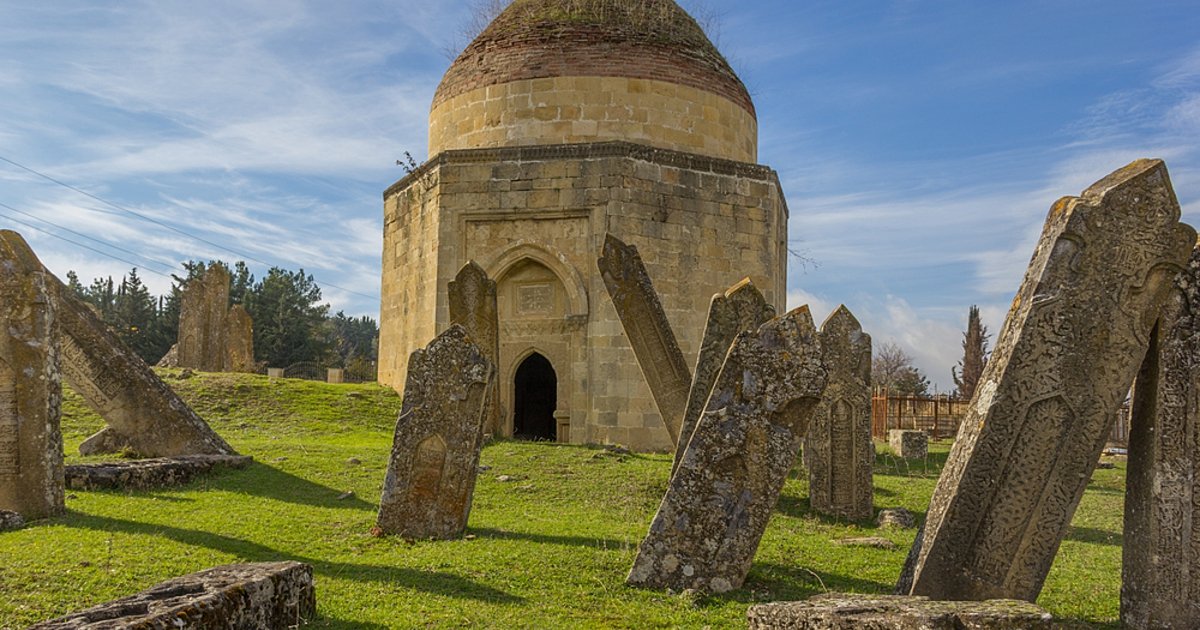
Life here was rarely peaceful. Caucasian Albania stood between the great powers of its time — Rome and Persia. Both sought control over the Caucasus as a vital strategic region. Local rulers constantly had to balance alliances and resistance in order to preserve independence. Campaigns, negotiations and conflicts shaped the fate of the kingdom. Yet despite external pressure, it managed to maintain its own culture and identity.
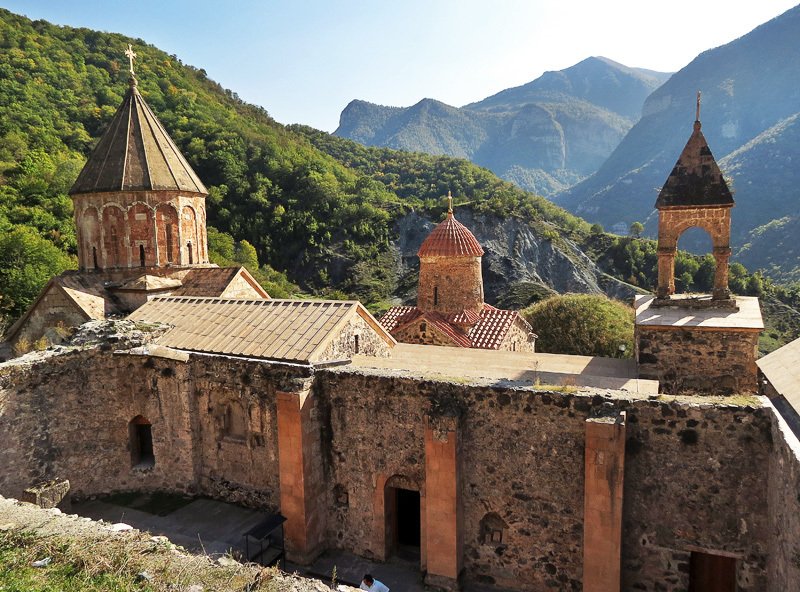
One of the most remarkable chapters of its story is connected with religion. As early as the 4th century CE, Christianity became the state faith — earlier than in many European countries. Stone churches and monasteries appeared across mountains and valleys, a local ecclesiastical tradition developed, and even a unique alphabet was created. This early Christian heritage left a lasting imprint that can still be traced in architecture and archaeological discoveries. Today, it feels especially striking to encounter such ancient Christian monuments in a country often associated with the Muslim East.
Over time, the kingdom lost its political independence. New eras brought new rulers, languages and religions. The very name “Caucasian Albania” gradually disappeared from chronicles. Yet the civilization itself did not vanish. Instead, it blended into later cultures, traditions and communities. Ancient foundations became the base for medieval towns, fortresses were reused, and old roads continued to guide travelers for centuries. History did not disappear — it layered itself upon the landscape.
Today, Caucasian Albania is more than just a historical term; it is one of the deepest roots of Azerbaijan’s identity. It explains why the country feels so complex and multi-layered, where different eras coexist side by side. Here, antiquity, Christianity, Islam and modern life meet within the same space. Walking through these lands often feels like traveling through time, where every step reveals another hidden chapter of the past.
There is something poetic about this forgotten kingdom. Unlike the ruins of famous empires turned into grand museums, the traces of Caucasian Albania seem quietly woven into nature itself — hidden among mountain slopes, silent villages and weathered stones of ancient temples. It does not announce itself loudly; it waits to be discovered.
Perhaps this is what makes it so fascinating. Caucasian Albania is a reminder that the history of Azerbaijan began long before the dates most people know. It is the first chapter of a much larger story — a civilization that disappeared from maps, yet forever remained embedded in the spirit of this land.
Comments (0)
Leave a Comment