Jazz in Azerbaijan is more than a musical genre: it is a story about freedom, improvisation and the ability to bring East and West together. Baku became one of the few Soviet capitals where jazz did not simply survive the restrictions but grew into a school of its own, with its own heroes and its own sound.
How Jazz Reached Baku
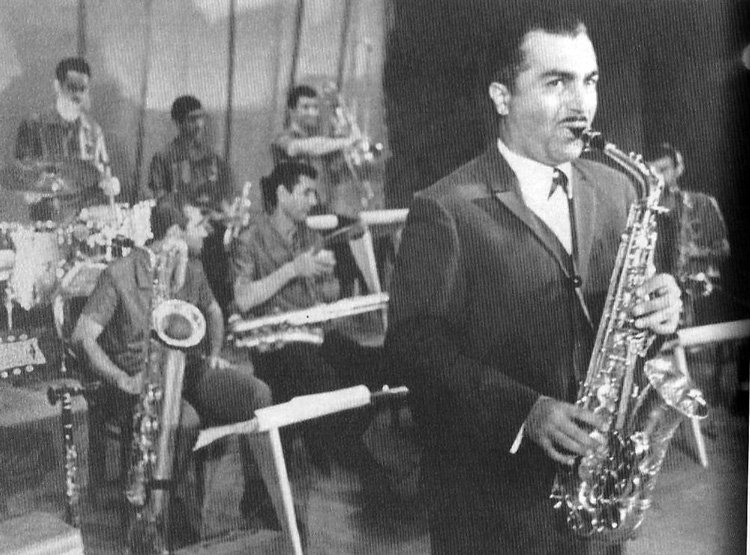
The first jazz sounds reached Baku in the 1920s, when gramophone records of American music were brought to the city and about ten concert venues hosted touring performers. In the 1930s the pianist Tofig Guliyev, who had trained in Moscow with Alexander Tsfasman, and the conductor Niyazi formed Baku’s first jazz orchestra. It was short-lived, but it set the tone: jazz took root in a city that had always been open to new ideas and different cultures. Musicians learned by ear from foreign radio, above all the Voice of America and the BBC, and from records that were very hard to obtain.
Bans and the Underground
The Soviet authorities’ attitude to jazz was ambiguous. Officials were wary of the very nature of the music: improvisation and a sense of personal freedom looked suspicious, and Maxim Gorky even coined the label “music of the fat.” After the war, during the Cold War, jazz was blacklisted and the saxophone was banned for a time. The fate of the Baku saxophonist Parviz Rustambekov was tragic: he was arrested in 1949 on charges of links with the United States and died in prison the same year, aged 27. His case was closed only in 1958.
After 1953 the Thaw brought jazz back into public life. Clubs, ensembles and festivals appeared, and musicians from other cities moved to Baku, where it was easier to work. Baku became one of the best-known jazz cities in the USSR, alongside Leningrad and Riga. The first jazz festival was held there in 1969, and composers Gara Garayev and Rauf Hajiyev helped jazz find its place in Azerbaijani music.
Jazz-Mugham: A Unique Synthesis
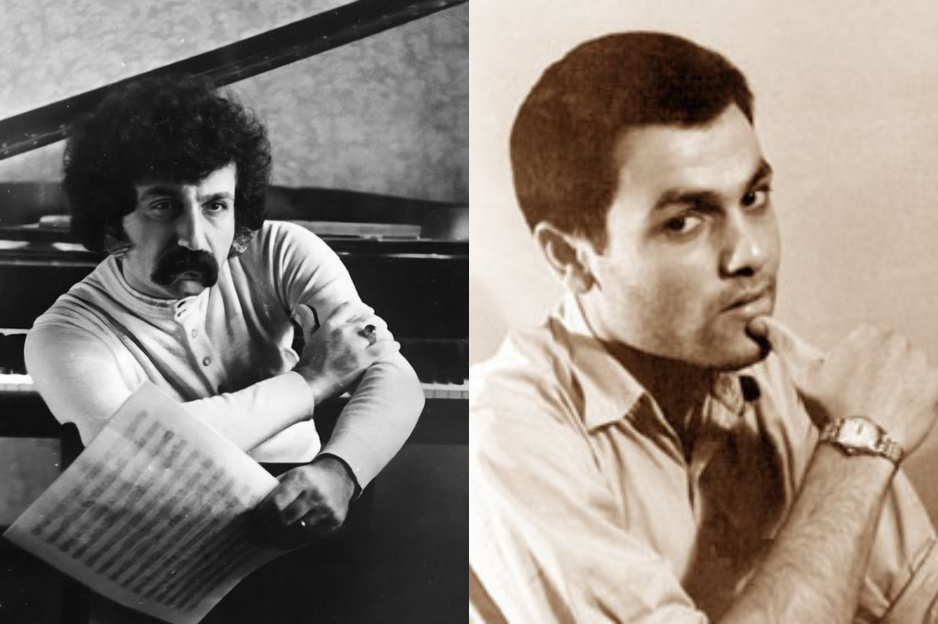
The main discovery of Azerbaijani jazz was its fusion with mugham, the ancient improvisational form of classical music. The founder of this direction is considered to be the pianist and composer Vagif Mustafazadeh (1940–1979). As a young man he learned jazz by listening to BBC shortwave broadcasts and working out what he heard at the piano. In 1966 he won first place at the Tallinn jazz festival with Gershwin’s “The Man I Love,” and the American radio host Willis Conover called him “the most lyrical pianist” he had heard. In the late 1970s he won an international competition in Monaco with “Waiting for Aziza,” a piece dedicated to his daughter. Dizzy Gillespie reportedly said Mustafazadeh played “the music of the future.”
What sets jazz-mugham apart is that it lacks the usual jazz meter: rhythm and scale are improvised, as in mugham itself. That is why the two traditions proved so close: both rest on free improvisation and inner depth. Mustafazadeh died in December 1979, aged 39, after a concert in Tashkent, but the direction he created remains a national treasure.
Alongside him stands Rafig Babayev (1937–1994), a composer, conductor and arranger who led jazz ensembles, wrote scores for more than twenty films and in 1991 founded the folkloric jazz group Jangi. His ensemble was a laureate at the Tallinn festival in 1967, and one of his compositions, performed in harmony with the “Bayati-Kurd” mugham, received special recognition. Babayev was killed in the Baku metro bombing in 1994.
After the Collapse of the USSR
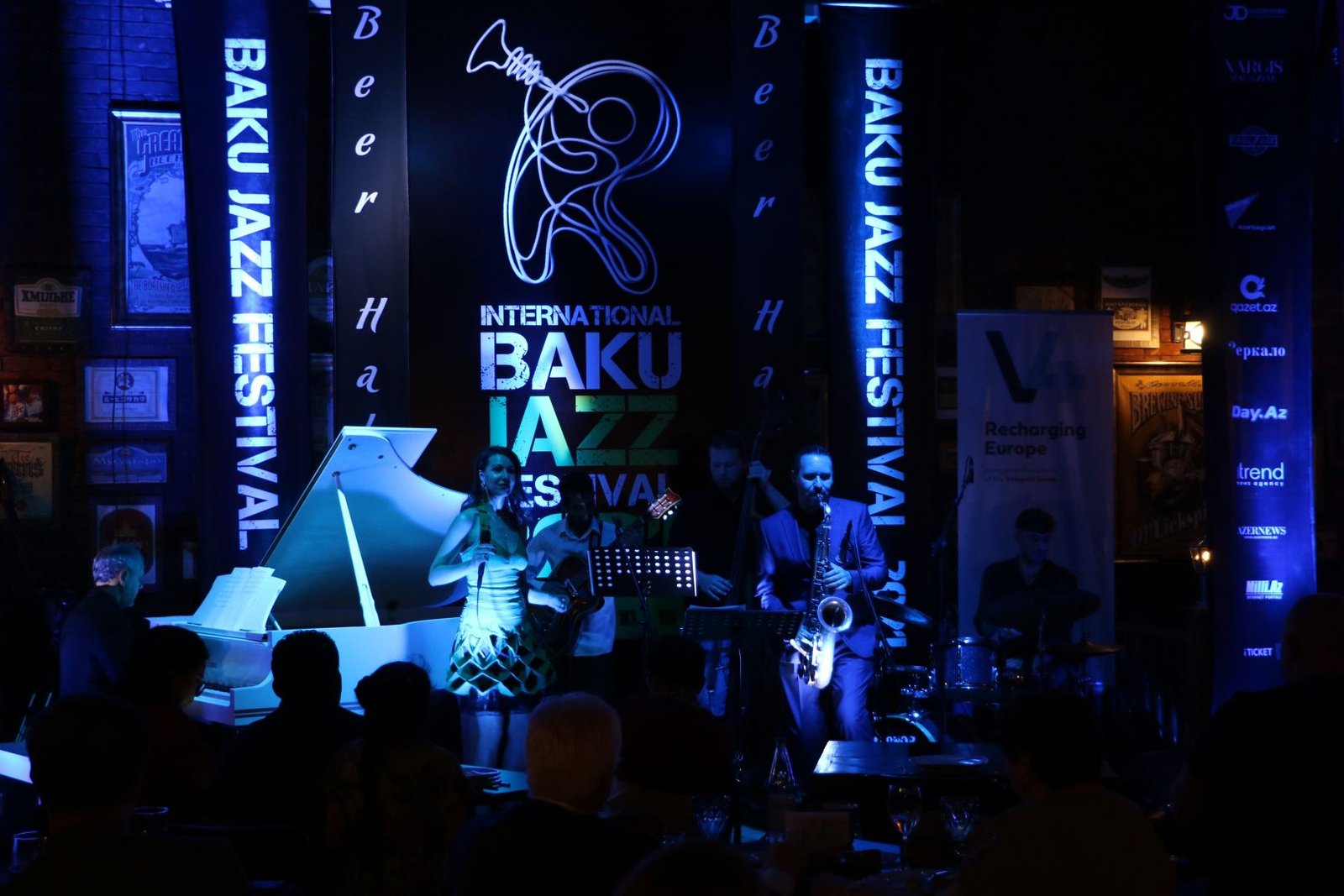
In the 1990s crisis, curfews and war almost ended jazz in Baku, and many musicians left. The revival began in the 2000s: the Baku Jazz Center, founded in 2002, supports jazz culture and hosts live performances, and in 2004 the country’s first printed jazz magazine, Jazz Dunyasi, appeared. In 2005 the saxophonist Rain Sultanov organised the first Baku International Jazz Festival. The first edition lasted two weeks, and at its close it was announced that the festival would become annual. Since then Baku has hosted Joe Zawinul, Herbie Hancock, Al Jarreau, Chick Corea and Diana Krall, and the programme includes a young-talent competition, jam sessions and workshops.
The Modern Scene
Today Azerbaijani jazz is known far beyond the country. The pianist Aziza Mustafazadeh, Vagif’s daughter, continues the jazz-mugham line, drawing on the traditions of Bill Evans and Keith Jarrett. Other notable names include Isfar Sarabski, Shahin Novrasli, Rain Sultanov and Amina Figarova. The pianist Salman Gambarov, winner of an all-Soviet competition in 1987, performs with his project Bakustic Jazz. Contemporary musicians freely mix traditional jazz, fusion and ethnic motifs while keeping the music lively and emotional.
Where to Hear Jazz in Baku
You can hear live jazz at the Baku Jazz Center, where, according to reference sources, concerts take place almost every evening, and at the jazz club of the Fairmont Baku Flame Towers hotel. Concert listings are easy to check on iticket.az, and in season it is worth checking the dates of the Baku International Jazz Festival and the Gabala International Music Festival. Confirm opening hours and programmes in advance, as they change.
Jazz in Azerbaijan reflects the national character: free, flexible, open to dialogue, yet firmly rooted in tradition. The merging of jazz and mugham is no accident but a logical continuation of the country’s historical path as a bridge between East and West. Listening to jazz in Baku, you hear the voice of a city that feels the spirit of the times and does not forget its roots.
Comments (0)
Leave a Comment