THE HISTORY OF AZERBAIJAN...
is a history of roads, empires, and the constant movement of people across the Caucasus. For centuries, this land stood at the crossroads of great civilizations: Persian merchants, Arab travelers, Byzantine diplomats, and traders of the Great Silk Road all passed through here.
But where wealthy trade routes existed, protection was always necessary. That is why fortresses began to appear on mountain peaks, along valleys, and near the entrances to cities — powerful stone structures built to defend the land from invasions and to control strategic roads.
Many of these fortresses were constructed in the early Middle Ages and served not only as military strongholds but also as symbols of the authority of rulers who controlled the region. Even today, their ruins leave a strong impression, reminding visitors of a time when the fate of cities and entire states was decided on top of these stone walls.
The fortresses of the Caucasus often became the scene of fierce battles. Armies of the Arab Caliphate, Mongol forces, Persian rulers, and Turkic states passed through these lands. Each era left its mark here in the form of new walls, towers, or legends that were passed down from generation to generation.
Sometimes these fortresses served as the last refuge for rulers and their armies. At other times, they became symbols of resistance, when small garrisons held their positions for months against much larger forces. This is why many fortresses in Azerbaijan are surrounded not only by stone walls but also by numerous historical stories and legends.
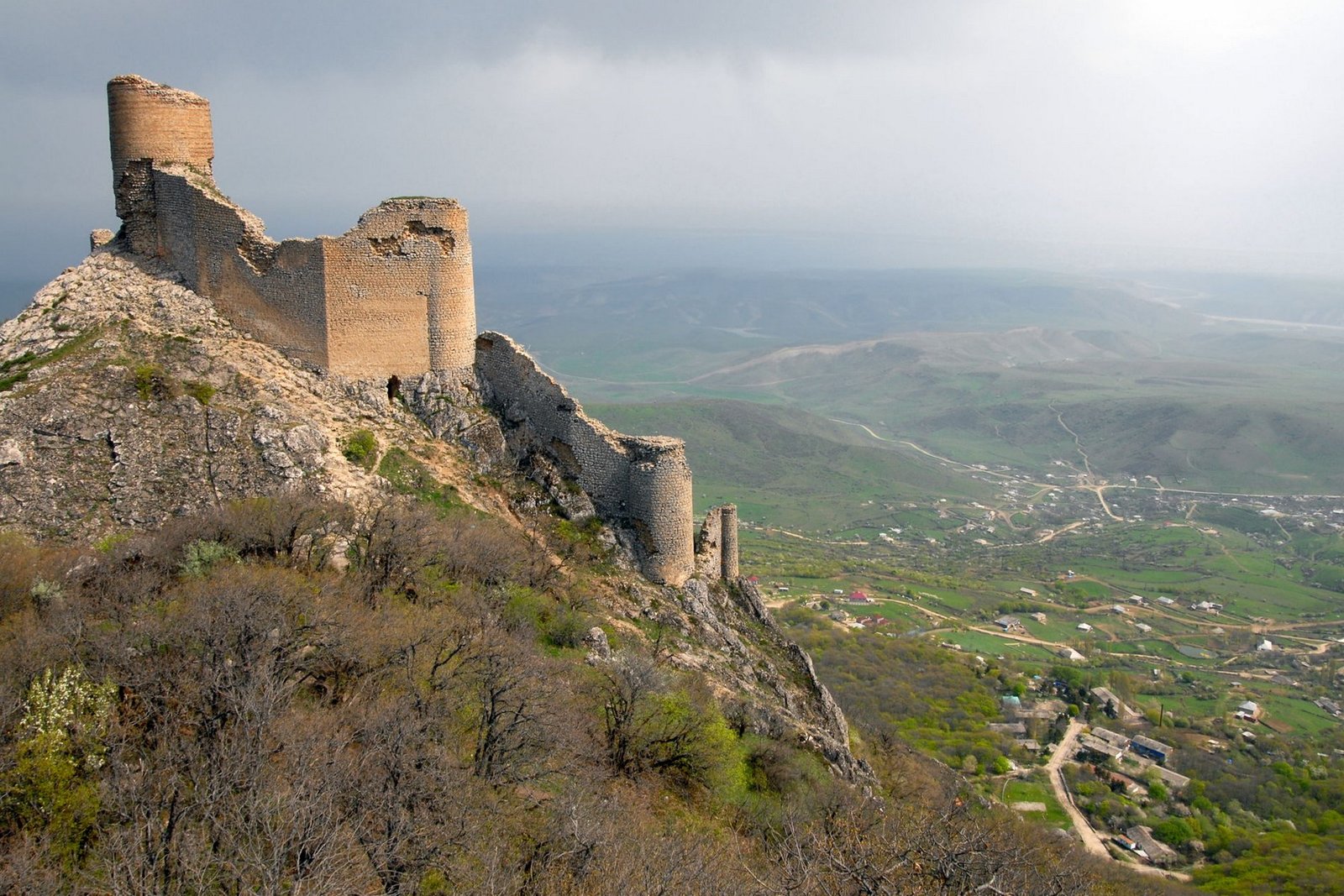
Chirag Gala — Guardian of the Northern Borders
One of the most impressive medieval fortresses in Azerbaijan is Chirag Gala, located in the mountains in the north of the country. Its history begins approximately in the 5th–6th centuries, when the region was under the influence of the Sasanian Persian Empire.
During this period, rulers sought to strengthen the northern borders of their state. The routes of nomadic tribes — including the Huns, Khazars, and other steppe peoples — passed through the Caucasus Mountains, and these tribes often raided the prosperous southern lands. Protecting these mountain passages was vital.
Chirag Gala became part of a large defensive system that controlled the roads leading to the Caspian coast. Some historians believe the fortress may have been connected to the fortifications guarding the famous “Caspian Gates,” a strategic passage between the Caucasus Mountains and the sea.
The fortress was built on a high cliff, making it almost inaccessible to enemies. From its walls, guards could observe vast territories around them, allowing them to spot approaching armies or caravans long before they arrived.
The name of the fortress can be translated as “Fortress of the Lamp” or “Fortress of Fire.” According to one theory, signal fires may have been lit here in ancient times to warn nearby fortifications of danger. Legend says these signals could be seen from many kilometers away, forming part of an early warning system between fortresses.
Today the ruins seem to merge with the mountain landscape. The wind moves freely among the ancient stones, while the panoramic views from the top remind visitors why this location was chosen for the construction of the citadel.
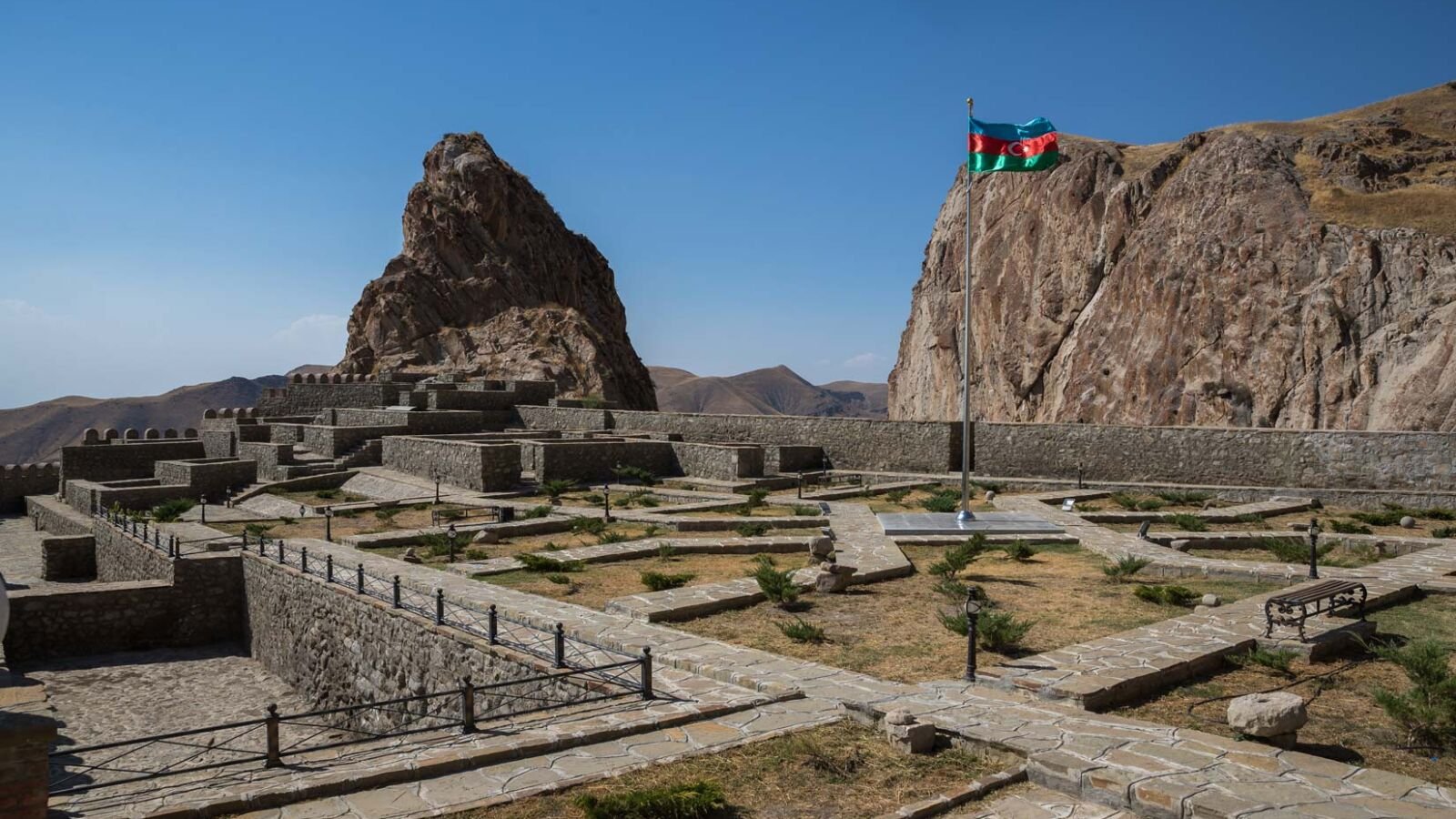
Alinja Castle — The “Machu Picchu of the Caucasus”
If Chirag Gala impresses with its location, Alinja Castle amazes visitors with its scale and dramatic history. This fortress is located in the Nakhchivan Autonomous Republic and is considered one of the most famous historical fortresses in the entire Caucasus region.
Alinja Castle was built on the top of a steep mountain rising above the surrounding valley. Its walls climb up the slope on several levels, creating a complex defensive system. Inside the fortress there were residential buildings, food storage facilities, water reservoirs, and barracks for the garrison.
Historians believe that the first fortifications may have appeared on this mountain as early as the early Middle Ages, but the fortress reached its greatest importance in the 14th century.
At that time, it became the center of resistance during the invasion of Timur, known in Europe as Tamerlane. Historical chronicles describe how the ruler of Nakhchivan, Jalal ad-Din, took refuge in the fortress together with his supporters.
The siege of Alinja lasted for many years and became one of the most famous sieges in the region’s history. Timur’s army struggled to capture the fortress due to its extremely difficult access. Narrow mountain paths and multi-level defensive walls made a direct assault nearly impossible.
Only after a long siege, when the defenders’ supplies were finally exhausted, was the fortress eventually captured.
This dramatic story turned Alinja Castle into a symbol of endurance and courage. Even today, reaching the fortress is a challenge: visitors must climb a long stone staircase that leads to the mountain summit. But this journey allows travelers to truly feel the atmosphere of the ancient fortress and imagine how difficult it was for enemies to conquer its walls.
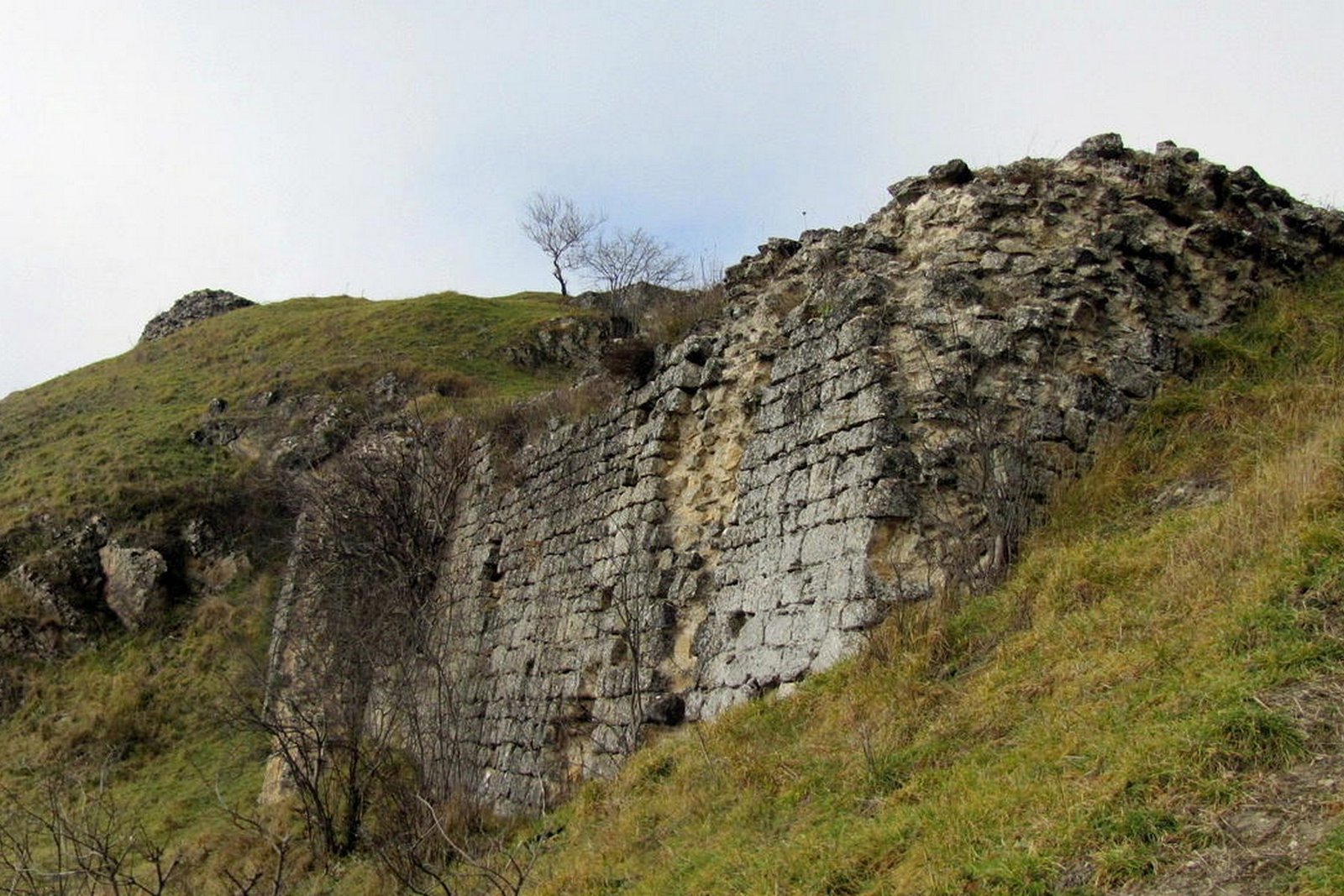
Gulistan Fortress — The Guardian of Shamakhi
For centuries, the city of Shamakhi was one of the main cultural and trade centers of the Caucasus. It was once the capital of the Shirvanshah state — a powerful dynasty that ruled the region for many centuries.
To protect the city from attacks, Gulistan Fortress was built on a hill nearby. Its walls towered over the surrounding landscape and allowed defenders to control the roads leading to the city.
The fortress witnessed many historical conflicts. In the 13th century, the region suffered during the Mongol invasions that devastated many cities across the Caucasus. Later, Shamakhi also endured wars between different states competing for control of important trade routes.
There is also a well-known legend connected with the fortress. According to local tradition, during one of the sieges the defenders managed to hold the fortress for a long time despite severe shortages of food and water. It is said that local residents secretly climbed the mountain at night, bringing supplies to the soldiers and helping them continue their resistance.
The fortress survived numerous historical events — wars, sieges, and powerful earthquakes for which Shamakhi is famous. Over time, much of the fortification was destroyed, but the remaining fragments of the walls still give an impression of its former grandeur.
Today the ruins of Gulistan are surrounded by quiet hills and vineyards. The place has a special atmosphere where the presence of history feels especially strong.
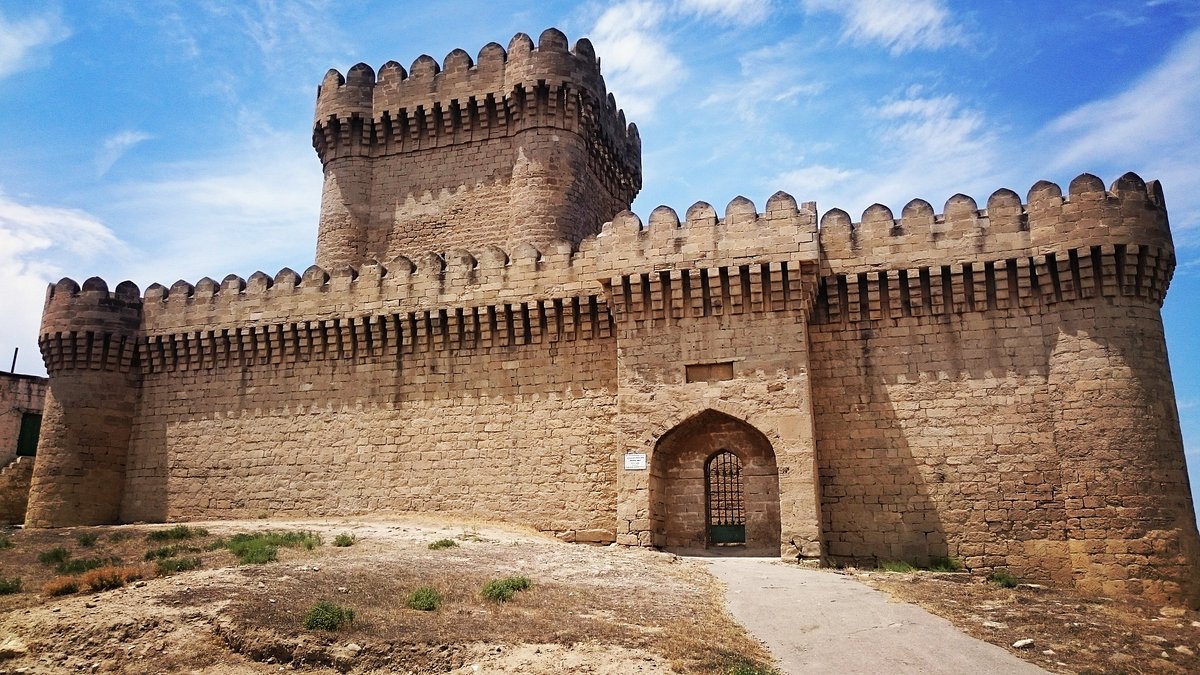
Ramana Fortress — The Watchtower of Absheron
Not far from Baku stands another interesting medieval fortification — Ramana Fortress. It was built around the 14th century and served as part of the defensive system of the Absheron Peninsula.
During the Middle Ages, Absheron had significant strategic importance thanks to trade routes and ports on the Caspian Sea. To protect the territory, watchtowers and small fortresses were built throughout the peninsula to monitor the surrounding lands.
Ramana Fortress is a powerful stone tower standing on a hill. Despite its relatively small size, it played an important role in the region’s defense and observation system.
Some researchers believe such towers were used not only for military purposes but also as signal stations. Through fire or smoke signals, watchtowers could transmit warnings about approaching enemies between settlements across Absheron.
Local legends are also connected with the Ramana tower. One story tells of a brave warrior who defended the fortress from attackers and held its walls until the very end. Similar stories are common in Azerbaijani folklore and highlight the importance these fortifications had for local communities.
Today Ramana is considered one of the best-preserved medieval towers on the Absheron Peninsula.
Stone Witnesses of History
The fortresses of Azerbaijan share one important characteristic — they are deeply connected with the surrounding landscape. They were built on cliffs, hills, and mountain peaks using local stone. Because of this, many of them appear as if they have grown directly out of the land itself.
Each fortress preserves its own story. Armies once passed through these places, caravans stopped here, and rulers and empires changed over time. These walls witnessed the rise of prosperous trade cities, invasions by nomadic tribes, and the struggle of powerful states for control of the Caucasus.
Today they no longer serve defensive purposes, but they continue to fulfill another important role — reminding us of the rich and complex past of the region.
Perhaps that is why travelers who climb toward these ancient walls often feel something special. Among the wind, mountains, and stone, it sometimes seems as if time slows down, allowing the echoes of long-forgotten centuries to be heard once again.
Perhaps that is why travelers who climb toward these ancient walls often feel something special. Among the wind, mountains, and stone, it sometimes seems as if time slows down, allowing the echoes of long-forgotten centuries to be heard once again.
For travelers who would like to explore these historical sites in more detail and plan their journey, a practical guide to visiting Azerbaijan’s medieval fortresses — including travel tips, locations, and useful information — can be found here:
https://tourisminazerbaijan.az/post/medieval-fortresses-of-azerbaijan-a-journey-through-centuries
Comments (0)
Leave a Comment