Baku is not a city you understand instantly. It doesn’t reveal itself in a single walk or even in a couple of days. The city is layered — ancient history, Soviet-era traces, and bold modern architecture all exist side by side.
That’s why spending one day in Baku is not about checking off landmarks. It’s about experiencing how the city transforms throughout the day. In the morning, it feels quiet and almost intimate. By midday, it becomes energetic and dynamic. In the evening, it turns into a space of light, movement, and contrast.
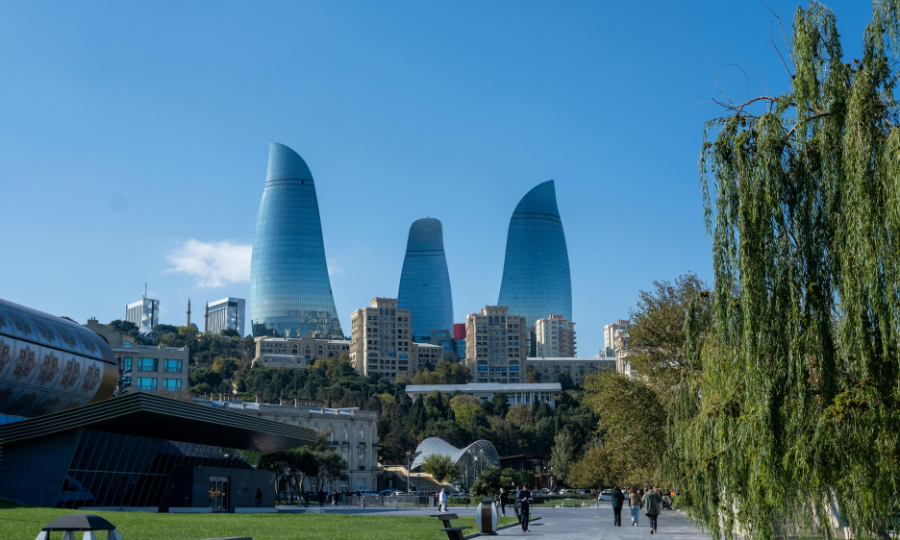
Morning: The Old City Without the Crowds
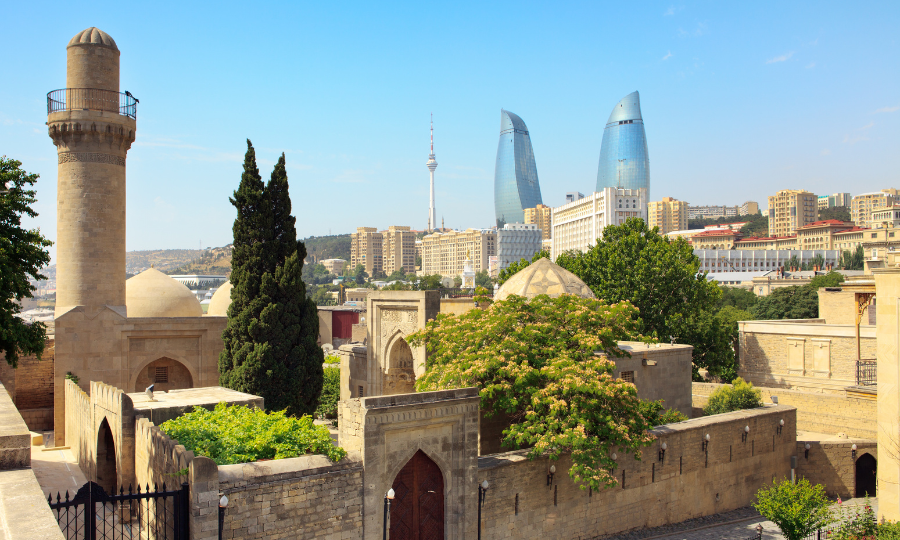
The best place to begin your day is Icherisheher, the historic center of Baku and a UNESCO World Heritage Site.
Early in the morning, it feels almost empty. Narrow stone streets, old wooden doors, small courtyards — everything looks unchanged for centuries. The atmosphere is calm, and time seems to slow down.
One of the key landmarks here is the Maiden Tower. It’s the symbol of Baku, yet its original purpose remains uncertain. Some believe it was a defensive structure, others suggest astronomical or ritual functions.
Nearby is the Palace of the Shirvanshahs, a 15th-century architectural complex. It includes courtyards, mausoleums, and historic buildings, offering a deeper look into Azerbaijan’s past.
Morning in Baku is less about movement and more about atmosphere — quiet steps, soft light, and the sound of wind through stone streets.
Midday: Movement, Sea, and Modern Baku
By midday, the city shifts. Streets fill with people, cafés open, and the rhythm becomes faster.
One of the best places to experience this is the Baku Boulevard, a long seaside promenade along the Caspian Sea. It’s one of the most popular places for walking in Baku.
Here, you see the city’s contrast clearly: the sea on one side, modern architecture on the other. Open spaces, parks, cafés, and wide walkways create a sense of balance between urban life and relaxation.
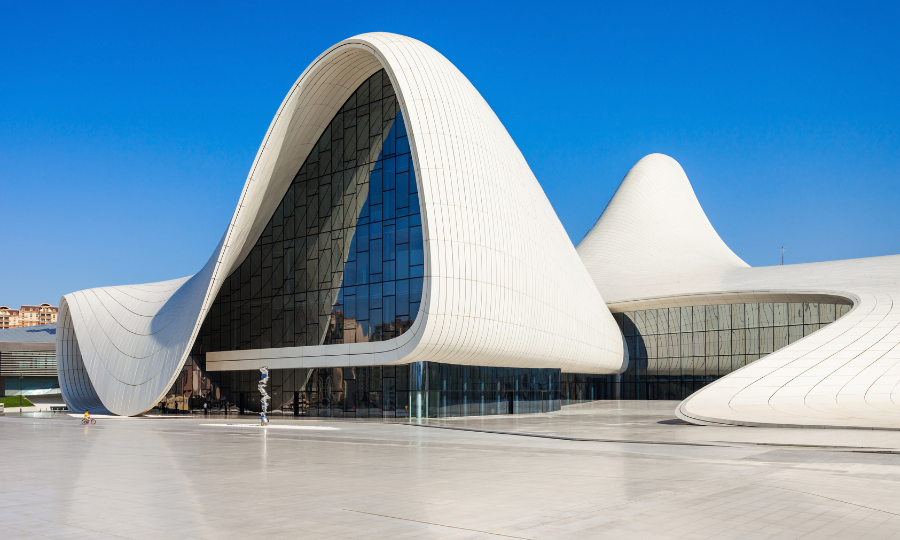
Not far from here stands the Heydar Aliyev Center, one of the most recognizable examples of contemporary architecture in the world, designed by Zaha Hadid. Its flowing, curved form stands in sharp contrast to the traditional structures of the Old City.
During the day, Baku feels like a fast-growing, modern capital — active, open, and constantly in motion.
Evening: Light, Views, and the City from Above
As the sun begins to set, Baku transforms again. The air becomes softer, the light warmer, and the city more atmospheric.
The best place to witness this transition is Highland Park, the main viewpoint of the city.
From here, you can see the entire panorama: the Caspian Sea, the boulevard, the Old City, and the modern skyline.
The most striking feature is the Flame Towers — three skyscrapers that have become the symbol of modern Baku. At night, their façades turn into dynamic light displays.
This is when the contrast between history and modernity becomes most visible.
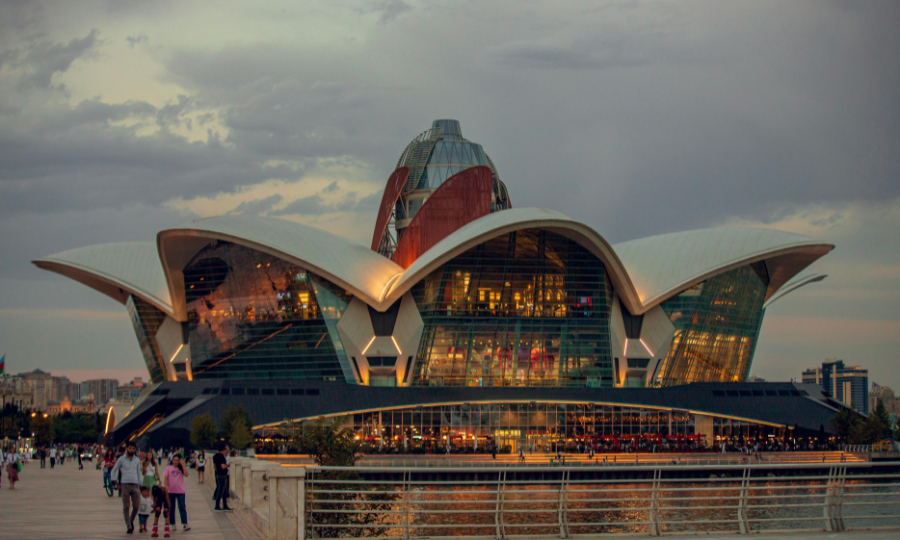
Night: A Slower Rhythm
Late at night, Baku slows down but doesn’t lose its energy.
People still walk along the boulevard, cafés remain open, and the city continues to live — just more quietly. The noise fades, but the atmosphere remains.
This is the moment when Baku feels less like a destination and more like a place you begin to understand.
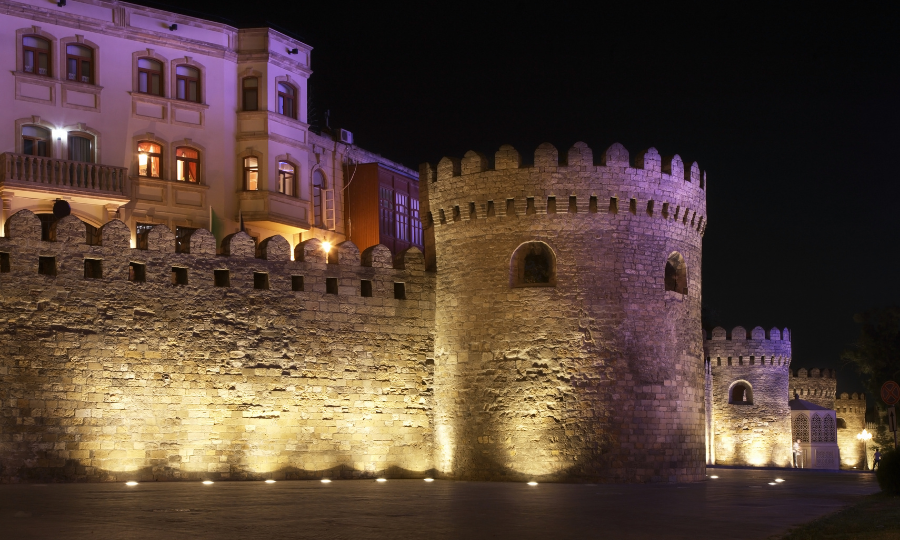
One day in Baku is not about how many places you visit — it’s about how the city changes around you.
Morning brings history and silence.
Daytime brings movement and contrast.
Evening brings light and perspective.
Night brings calm and reflection.
If you’re wondering what to do in Baku in one day, the best approach is simple: don’t rush. Let the city unfold at its own pace.
Comments (0)
Leave a Comment