Shusha is one of the most famous and symbolic cities of Azerbaijan. Located high in the mountains of Karabakh, on a rocky plateau surrounded by dense forests and deep gorges, the city has played an important role in the history, culture, and spiritual life of the region for centuries. It is often called the cultural capital of the Caucasus — a place where outstanding musicians, poets, and thinkers were born, and where the very atmosphere of the city inspired generations of creative people.
The city was founded in the mid-18th century by Panah Ali Khan, the ruler of the Karabakh Khanate. At that time the Caucasus was a region where the interests of different states and dynasties often clashed, and military conflicts were common. Because of this, the new capital of the khanate needed to be built in a location that could provide strong natural protection. Panah Ali Khan chose a high plateau about 1,400 meters above sea level. On three sides it was surrounded by steep cliffs, while narrow roads leading up to the plateau made it easy to control access to the city. Thanks to this natural landscape, Shusha quickly became one of the most impregnable fortresses in the region.
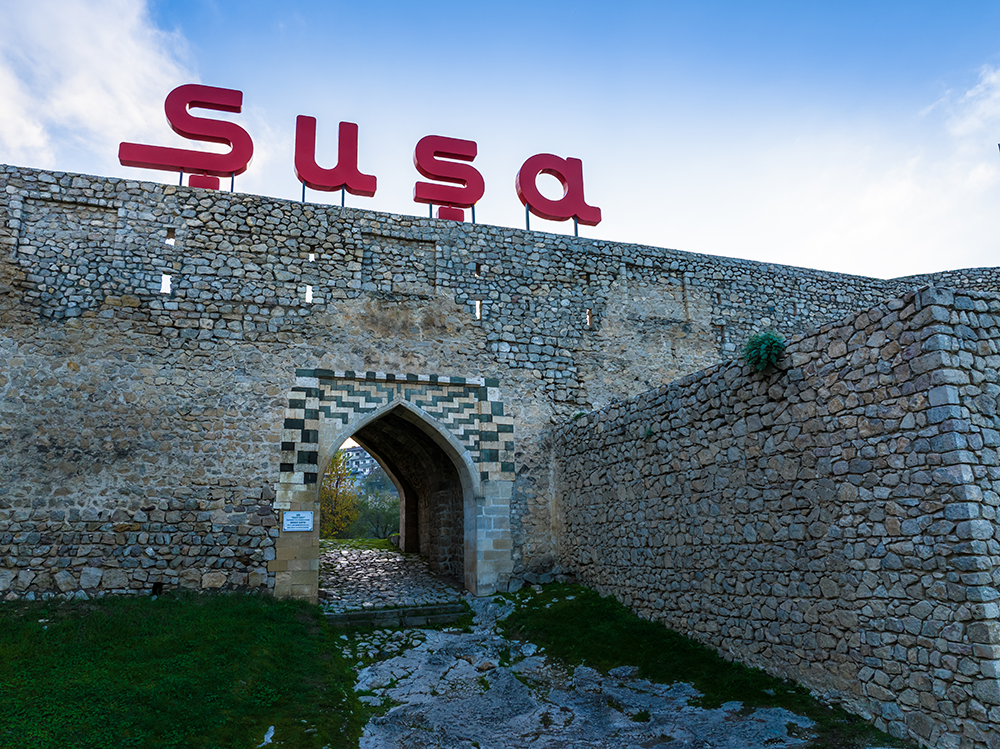
The fortress walls of the city were built from local stone and reinforced with towers and gates. Through these gates passed merchants, craftsmen, and travelers, while inside the walls a lively city gradually began to grow. Shusha soon became an important political and economic center of the Karabakh Khanate. Trade developed here, craft workshops operated, and caravanserais were built where merchants traveling between the cities of the Caucasus, Persia, and the Ottoman Empire could stay.
Over time, however, Shusha became famous not only as a fortress and a trading center. The city gradually turned into one of the main cultural centers of the entire Caucasus. In the 19th century literature, poetry, and music flourished here. Literary gatherings were held in Shusha where poets read their works, discussed philosophy and art, and musicians performed traditional melodies. These meetings created a unique intellectual atmosphere that earned the city a reputation as the cultural capital of the region.
Music occupied a special place in the life of Shusha. It was here that one of the most famous schools of mugham performance was formed — the traditional musical genre of Azerbaijan that combines poetry, philosophy, and improvisation. Mugham performers, known as khanende, often performed at celebrations and cultural gatherings, and their art was passed down from generation to generation.
Shusha became the birthplace of many outstanding cultural figures. The great Azerbaijani composer Uzeyir Hajibeyli was born here — the creator of the first opera in the East, Leyli and Majnun. His work became an important milestone in the development of musical culture throughout the region. Another famous native of the city was Bulbul, an outstanding opera singer and teacher who made a huge contribution to the development of vocal art in Azerbaijan.
Shusha is also known as a city of poets. One of the most prominent figures associated with the city was Khurshidbanu Natavan, a poetess and the daughter of the last Karabakh khan. She was not only a talented poet but also a patron of the arts who actively supported the development of literature and culture. Thanks to her efforts, literary gatherings were organized in the city, attracting poets and intellectuals from across the region.
By the 19th century Shusha had become one of the largest and most developed cities in the South Caucasus. Schools, cultural societies, and musical circles existed here. The city was also known for its architecture: mosques, caravanserais, and residential houses with carved balconies and spacious inner courtyards were built throughout the city. Among the architectural landmarks, the Yukhari Govhar Agha and Ashaghi Govhar Agha mosques, built in the 19th century, became important elements of the city’s landscape.
Yet the history of Shusha is not only a story of culture and art. The city has also witnessed dramatic historical events and military conflicts. Because of its strategic location, Shusha played an important role in the struggle for control over the Karabakh region. At different times it became the scene of battles and political changes.
In the 20th century the fate of the city became closely connected with the conflicts that unfolded in the Caucasus. One of the most difficult periods in Shusha’s history came at the end of the 20th century. In the early 1990s, during the First Karabakh War, the city became a center of military operations and in 1992 came under Armenian control. Many historical buildings and cultural monuments were damaged or destroyed, and residents were forced to leave the city.
For nearly thirty years Shusha remained outside Azerbaijan’s control. However, in 2020, during the Second Karabakh War, the city once again became the site of one of the key battles of the conflict. After intense fighting, the Azerbaijani army regained control of Shusha. This event became a significant moment in the modern history of the country.
After the conflict ended, a large-scale process of reconstruction began. Today Shusha is gradually regaining its role as a cultural center. Music and poetry festivals are being held here again, historical buildings are being restored, and architectural monuments are being carefully reconstructed.

In addition to its rich history and cultural heritage, Shusha is also known for many places that make the city particularly interesting for travelers. One of the most famous natural symbols of the city is the Jidir Duzu plateau. This wide green plateau stands on the edge of a rocky cliff and offers breathtaking views of the Dashalty River valley and the mountain ranges of the Lesser Caucasus. For centuries this place played an important role in the life of the city. Folk festivals, horse games such as chovgan — an ancient precursor of modern polo — and large cultural gatherings were held here. Today Jidir Duzu remains one of the most beautiful panoramic viewpoints in Karabakh and an important symbol of Shusha. In recent years music festivals and cultural events have once again been held here.

Not far from the city, in the picturesque Dashalty valley, lies another natural wonder of the region — the Chetir Waterfall. Its name translates as “umbrella” because the water falls from a dome-shaped rock ledge, forming a natural canopy. Surrounded by lush vegetation and moss-covered rocks, the waterfall creates an almost fairy-tale atmosphere. For a long time residents of Shusha came here to relax and enjoy nature, and travelers have often described it as one of the most beautiful places in all of Karabakh.
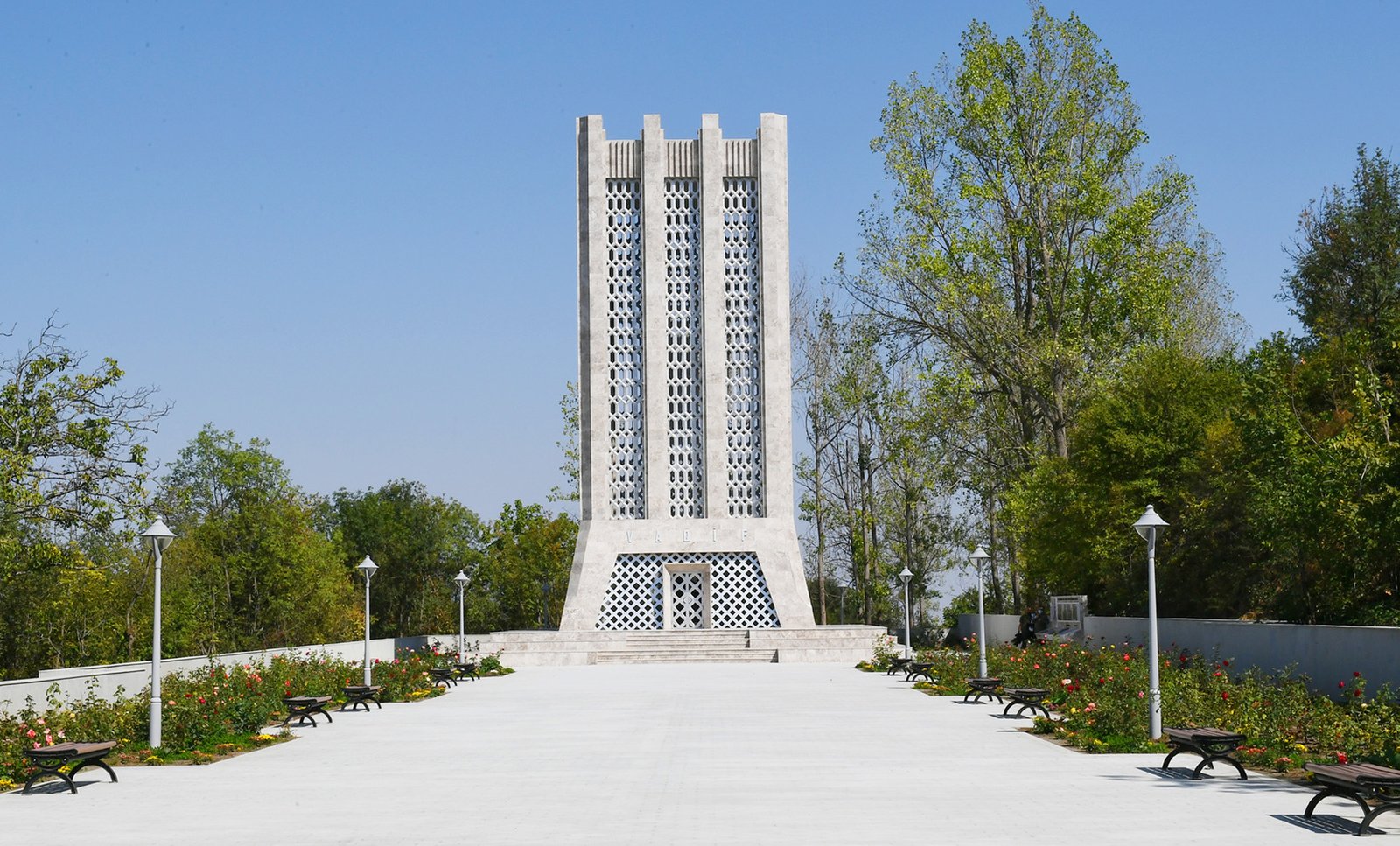
The historical architecture of Shusha also preserves many fascinating monuments. One of them is the mausoleum of the great Azerbaijani poet Molla Panah Vagif. It was built on the edge of the Jidir Duzu plateau and has become an important symbol of the city’s cultural memory. Vagif was not only a prominent 18th-century poet but also a statesman who served as vizier to the Karabakh khan. His poetry was known for its realism and closeness to everyday life, which secured his place as one of the most important figures in Azerbaijani literature.
In the old part of the city one can also see buildings connected with the lives of Shusha’s famous residents. Among them is the house-museum of Bulbul, one of Azerbaijan’s most celebrated opera singers, as well as monuments dedicated to the composer Uzeyir Hajibeyli. These places remind visitors that Shusha was for many years the true cradle of the country’s musical culture.
Among the architectural landmarks of the city, mosques built in the 19th century occupy a special place. At one time Shusha was home to around seventeen mosques, each serving as the center of life for its own neighborhood. One of these historic religious buildings is the Julfalar Mosque, located in one of the old districts of the city. Dating back to the 19th century, it is considered an important part of Shusha’s rich architectural heritage.
The city also preserves historical public buildings such as the Shirin Su bathhouse. It was built in the late 19th century by order of the poetess Khurshidbanu Natavan. The bathhouse received its name from the clean drinking water that was brought into the city through a water supply system initiated by Natavan. In those days bathhouses were important elements of urban life — places where people not only bathed but also met friends, discussed news, and spent time in conversation.
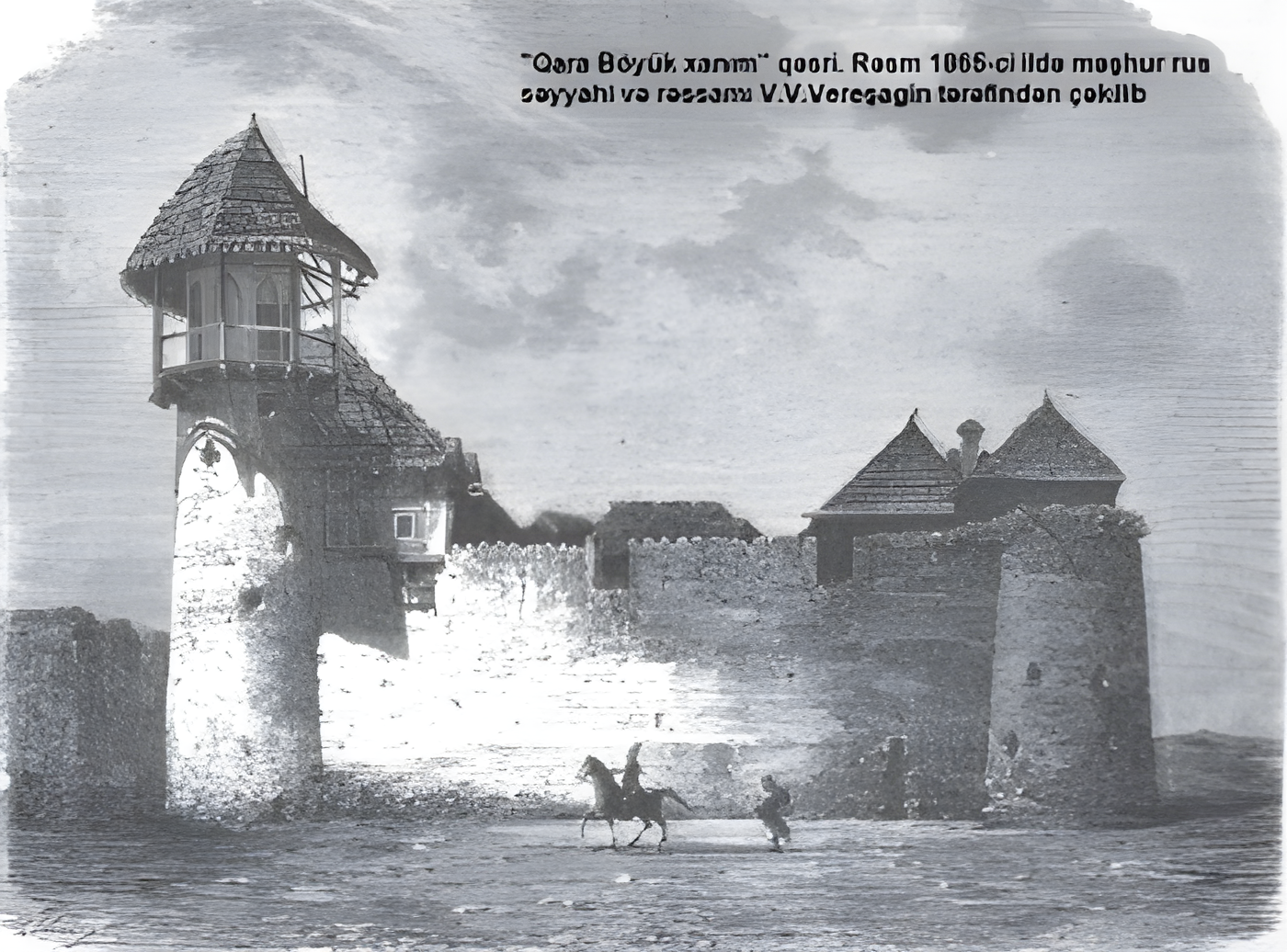
The historical image of Shusha is also complemented by old palace buildings. One interesting architectural monument is the castle-palace of Gara Boyuk Khanim, built in the 18th century. The structure is a fortified palace complex with towers and massive walls, reminding visitors of the time when Shusha served as the center of the Karabakh Khanate and an important political city of the region.
Modern Shusha is gradually reviving its cultural life. New public spaces are appearing in the city, including the State Flag Square, which opened after reconstruction in 2024. It has become a place for events and celebrations and symbolizes the revival of the city after many years of conflict.
Today Shusha represents far more than just a historic city. It is a place where nature, architecture, and culture intertwine. Visitors can see ancient fortress walls, walk along streets where poetry and music once echoed, and climb to plateaus offering panoramic views of Karabakh. This unique combination of history, culture, and natural beauty makes Shusha one of the most remarkable places in Azerbaijan and throughout the Caucasus.
Comments (0)
Leave a Comment