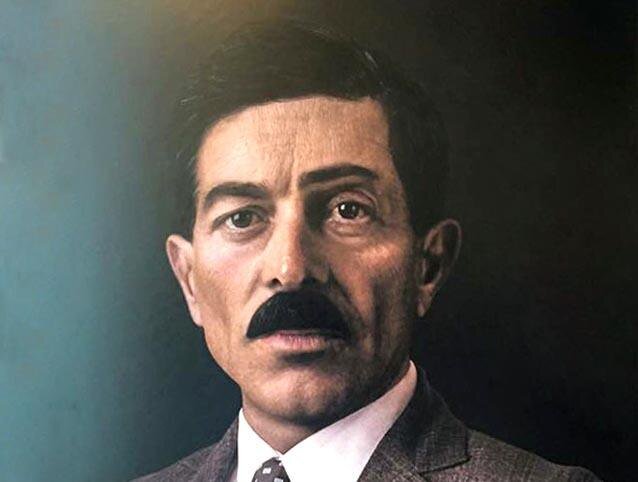
Aliaga Vahid (1895–1965) was a famous Azerbaijani poet. His name is closely connected with two poetic genres: meykhana and ghazal. He was born into a simple family and worked hard from a young age. He went from being a laborer to becoming a famous master of poetry, received the title of Honoured Art Worker of the Azerbaijan SSR (1943), and left an important mark on the history of Azerbaijani literature.
What Is Meykhana and Why Is Aliaga Vahid Important?
Meykhana is a special genre of Azerbaijani oral folk art. Improvisation plays an important role in it. Meykhana is often called a predecessor of modern rap.
Several poets take part in a poetic dialogue. Each rhyming line is based on the previous one. The last pair of lines is usually the most expressive, and other participants repeat it.
Aliaga Vahid is considered one of the founders of this genre. He turned it into a form of poetry and made it an important part of Azerbaijani culture. His works included gentle satire, philosophy, and folk wisdom, and in the Soviet period his poems were often performed as examples of meykhana.
The Master of Ghazals — Eastern Poetry
Besides meykhana, Aliaga Vahid became famous for his ghazals. A ghazal is a traditional form of Eastern poetry. It usually consists of several couplets with a single rhyme and a repeating refrain.
Vahid adapted this traditional form to modern life and made it popular with ordinary people. His poetry spoke about love, loneliness, philosophical ideas, and the beauty of nature.
The Poet's Monument in the Heart of Icherisheher
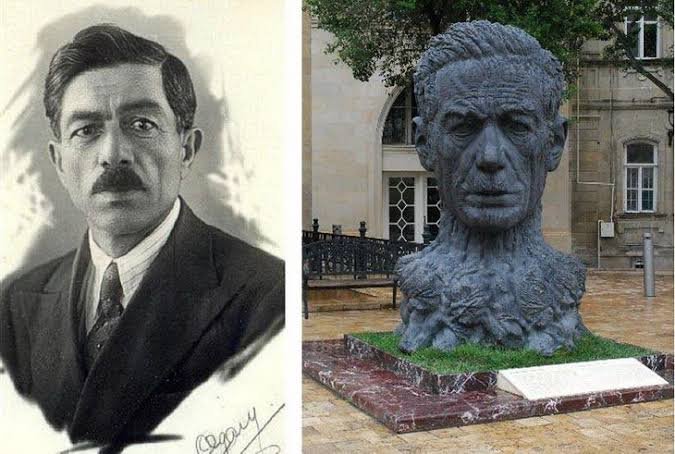
When you walk through Icherisheher (the Old City of Baku), you can see an unusual monument to Aliaga Vahid.
The bronze bust was created by the sculptor Rahib Hasanov and the architects Sanan Salamzade and Jahangir Mammadov. In the poet's "hair" the sculptor placed multi-figure scenes: Vahid's wedding party and a feast with friends, including Huseyn Javid, Mikayil Mushfig, Jafar Jabbarly, Azer Buzovnaly and Sattar Bahlulzade. The monument shows the connection between the poet and his works and his literary era.
The bust was installed in 1990 in the garden near the Philharmonic Hall, and at the end of 2008 it was moved to the Old City, not far from the Miniature Book Museum.
A Short Biography and His Way to Recognition
Aliagha Mammadgulu oghlu Isgandarov, known by the pen name Vahid, was born on 17 February 1895 in the village of Masazir near Baku, in a carpenter's family. From a young age he worked with his hands. He received his first education at a madrasa but did not finish it, because he soon understood that literature was his path.
An important moment in his life was joining the literary circle Majmaush-Shuara ("Society of Poets"), where he met the poets Muniri, Azer Imamaliyev (Buzovnaly) and other well-known Baku authors. Under their creative influence he began to write his first lyrical poems. The name "Vahid" means "unique" or "one".
In the 1920s and 1930s his collections of satirical poems appeared, including "Couplets" (1924) and "Mollakhana" (1938). A film about his life, "Ghazalkhan", was made in 1991. Aliagha Vahid died in Baku on the night of 30 September to 1 October 1965 and was buried at the Alley of Honor. A school, a garden, a house of literature and a street in Baku are named after him.
The Influence of Great Poets and People's Recognition
Vahid was influenced by great masters of the ghazal, above all Fuzuli and Seyid Azim Shirvani. He also translated ghazals by Nizami, Khagani and other classics into Azerbaijani. His ghazals became very popular, and people repeated them from one person to another. People called him "Ghazalkhan", the "Khan of ghazals". This name showed his great skill and popularity among the people.
Friendship with Sergei Yesenin
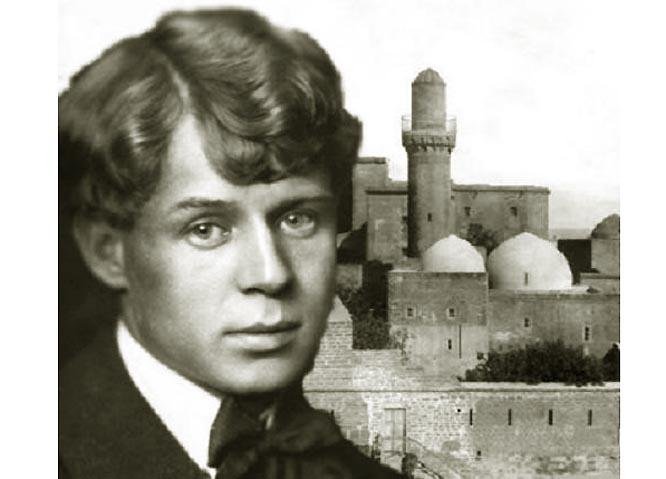
In 1924, Vahid met the famous Russian poet Sergei Yesenin when Yesenin was living in Baku, in the village of Mardakan.
Their meeting became the beginning of a literary friendship. According to reference sources, Vahid invited Yesenin to literary gatherings where he first heard Azerbaijani mugham, and this influence can later be seen in Yesenin's "Persian Motifs".
Why Is It Worth Learning More About Vahid?
Aliaga Vahid was not only a poet. He was a voice of his time and a reflection of the feelings of the Azerbaijani people, their pain, love, and sincerity.
His meykhana is like street music born from the heart, while his ghazals are like beautiful Eastern poetry full of feelings and thoughts.
When walking through the narrow streets of Icherisheher, among the old stones and the atmosphere of centuries, it is impossible not to notice the monument to this great poet. In its bronze figure, scenes from his life and the circle of his friends come alive.
Here, in the quiet streets of the Old City, Vahid's poetry does not simply sound — it breathes and lives.
Everyone who stops near this monument can feel that Vahid is not only in bronze. He is in the air, in the rhythm of the streets, and in the soul of Baku.
Comments (0)
Leave a Comment