Have you ever heard music that seems to speak to your heart without words? Welcome to the world of Azerbaijani mugham, a unique musical tradition that lives between sound, silence and emotion. Mugham is more than a genre: it is part of Azerbaijan’s cultural code, its history and philosophy, captured in voices, melodies and improvisation.
Mugham can sound like both meditation and confession. It speaks of love and separation, life and death, and the search for harmony. It brings together Eastern poetry, philosophical ideas and virtuosic musicianship. In 2003 UNESCO proclaimed Azerbaijani mugham a Masterpiece of the Oral and Intangible Heritage of Humanity, and in 2008 it was inscribed on the Representative List of the Intangible Cultural Heritage of Humanity.
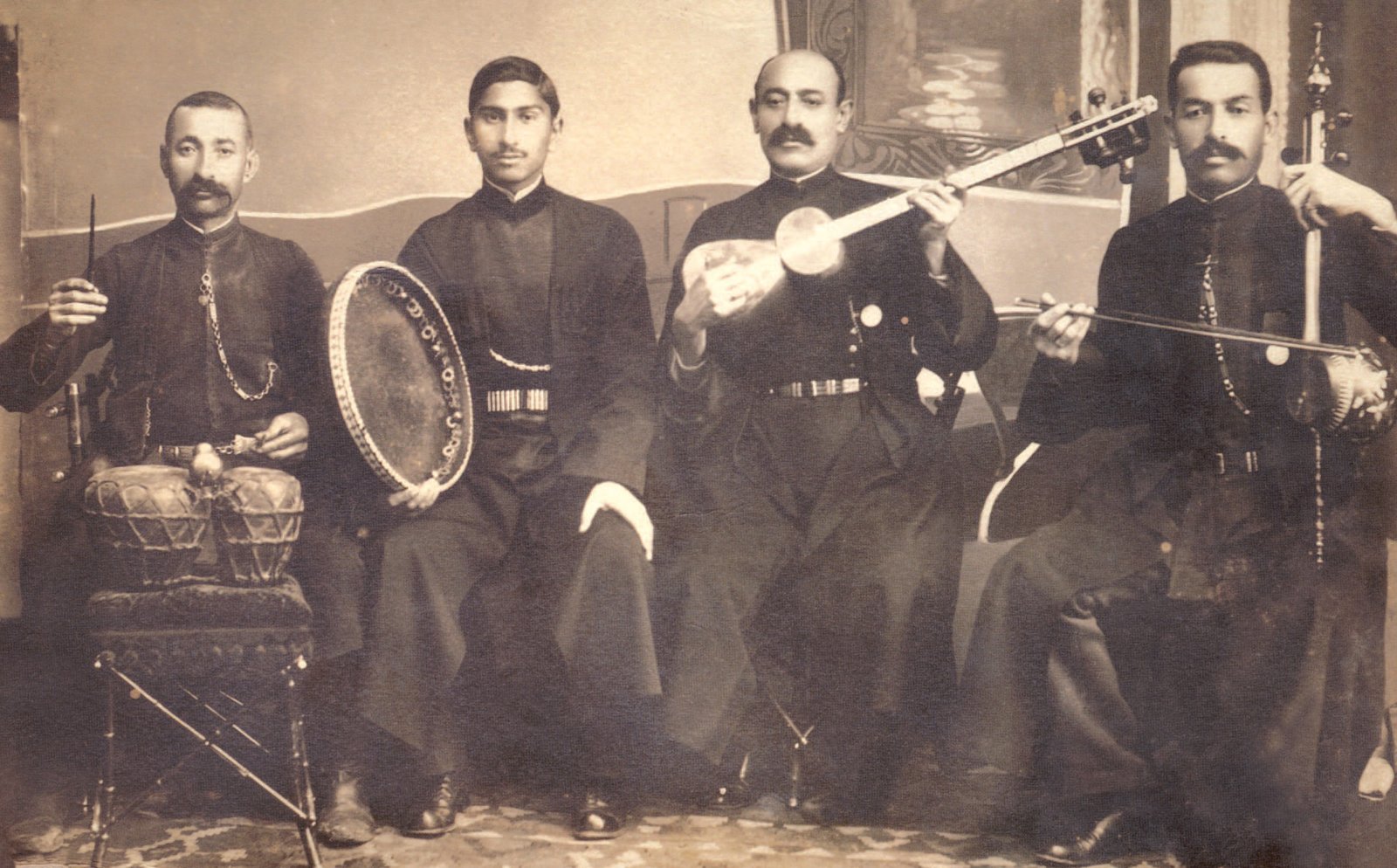
The origins of mugham: centuries of music
The roots of mugham go back to the Middle Ages. In the 16th and 17th centuries it developed as professional court music, and later it was heard at weddings, at gatherings of connoisseurs and in folk culture. Mugham grew from an oral tradition into a complex musical form with its own structure and rules. Researchers note its kinship with other modal traditions of the Middle East: the Iraqi maqam, the Persian radif and Turkish makams. In the 19th and early 20th centuries, three performance schools took shape: Karabakh, Shirvan and Baku.
The composer Uzeyir Hajibeyli played an important role in the history of the genre: in 1908 he wrote the opera “Leyli and Majnun”, the first mugham opera.
Mugham today: tradition and modern music
Modern mugham combines centuries-old tradition with new forms. It is performed in its classical form and combined with jazz, rock and electronic music. These experiments attract young listeners and keep interest in the genre alive.
Azerbaijan hosts mugham festivals. The annual Mugham Festival has been held in Sheki since 1994 (it used to be held in Shusha), and the International World of Mugham Festival has been held in Baku since 2009.
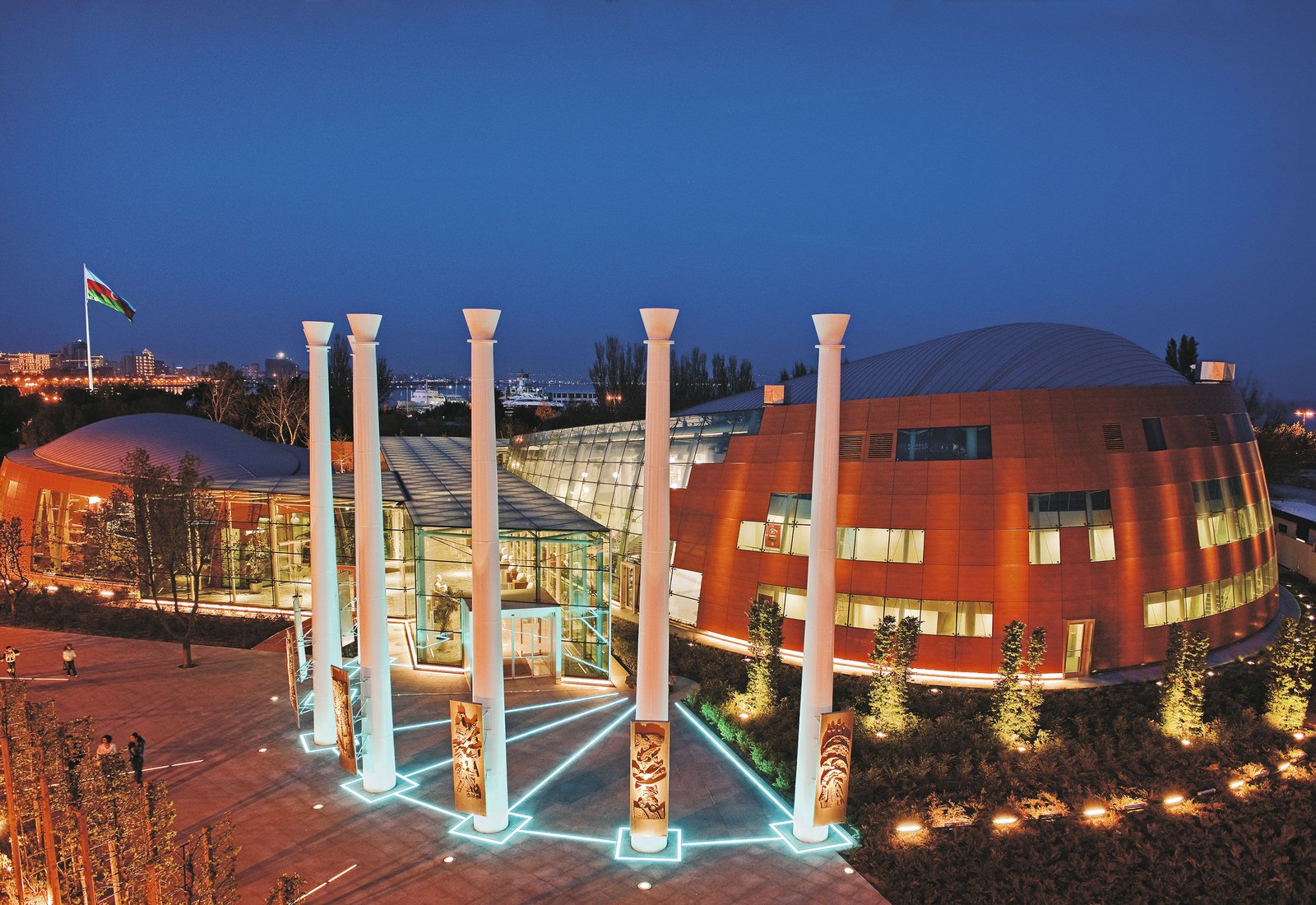
In Baku, the International Mugham Center stands on the Seaside Boulevard. It opened on 27 December 2008, its building is inspired by the shape of the tar, its hall seats about 350, and its program includes concerts, master classes and conferences. A Mugham Center also opened in Aghdam in 2025.
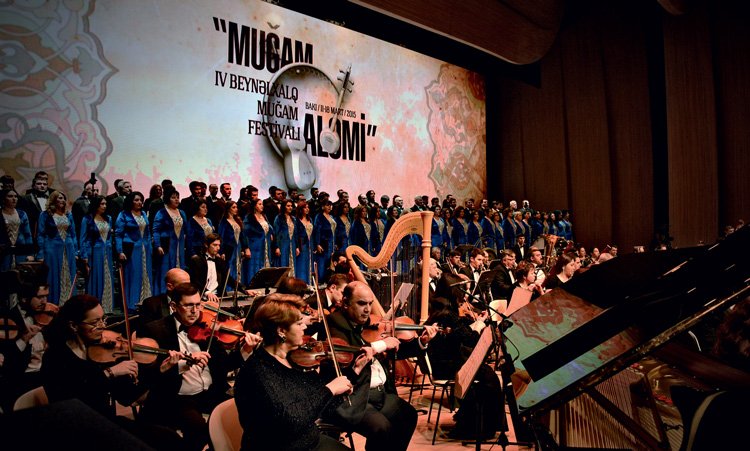
What does mugham sound like?
Mugham is usually performed by a trio:
- Khananda: a singer with a refined command of voice and nuance. He carries the main melody and adds improvised ornamentation.
- Tar: a string instrument with a deep, rich tone.
- Kamancha: a bowed instrument whose sound resembles the human voice.
- Gaval (daf): a large frame drum that adds rhythm.
A single mugham performance can last for hours. Musicians freely vary melodies and rhythms, conveying the mood of the moment.
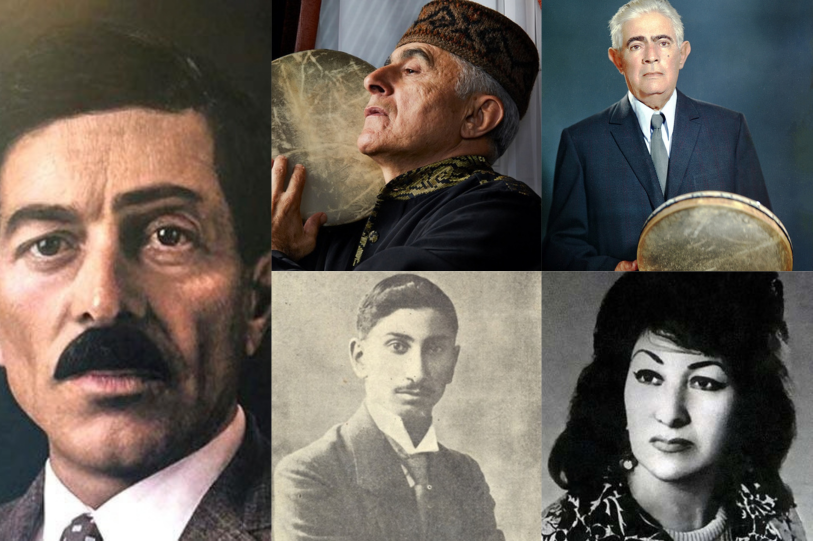
Famous mugham masters
- Aliagha Vahid (1895–1965): a poet and master of the ghazal. Verses in this genre are traditionally sung in mugham.
- Alim Qasimov (born in 1957 in the village of Nabur, Shamakhi district): one of the best-known performers of our time, People’s Artist of Azerbaijan (1993) and winner of the IMC-UNESCO Music Prize (1999). His performances with his daughter Farghana Qasimova are known as a dialogue between two generations.
- Khan Shushinski (1901–1979): a khananda born in Shusha, People’s Artist of Azerbaijan. In 1960 he founded the “Mugham Studio” at the Azerbaijan State Philharmonic.
- Seyid Shushinski (1889–1965): one of the best-known khanandas of the 20th century. He was born in the village of Horadiz.
- Rubaba Muradova (1933–1983): a singer and People’s Artist of the Azerbaijan SSR (1971), a pupil of Seyid Shushinski. She is known for the role of Leyli in the opera “Leyli and Majnun”.
Where to hear mugham live
- The International Mugham Center in Baku regularly hosts concerts by recognized masters.
- Shusha is one of the main historic centers of mugham. Many outstanding singers were born here, and the city was called the “Conservatory of the East”.
- The State Museum of Musical Culture of Azerbaijan in Baku keeps instruments including the tar, kamancha and gaval.
- The Baku Academy of Music, founded in 1921 as a conservatory, teaches mugham as an academic discipline.
- Icherisheher (the Old City): during cultural events you can hear traditional music in a historic setting.
Mugham: a bridge between cultures
Since the 1970s, mugham has become known in Europe, the USA, Canada and Japan. Alim Qasimov has performed on international stages: with the Silk Road Project in New York, at the Cervantino Festival in Mexico, in Osnabrück and in Cairo. In Azerbaijan, mugham is regarded as the cultural code of the nation.
Why hear mugham at least once
- It is living history that carries the feelings of generations.
- It is a deep meditation that lets you feel outside of time.
- It is an art of improvisation: every performance sounds different.
- It is an experience that cannot be put into words and must be felt.
Comments (0)
Leave a Comment