On the northeastern slopes of the Greater Caucasus Mountains, where peaks rise against the sky and a river winds between cliff faces, lies one of Azerbaijan's most impressive natural wonders. This gorge takes its name from the foot of one of the region's principal symbols—the city of Quba, located at an elevation of 600 meters above sea level. But the true protagonist of this place is the Gudialchay River and the path it has cut through the mountain masses.
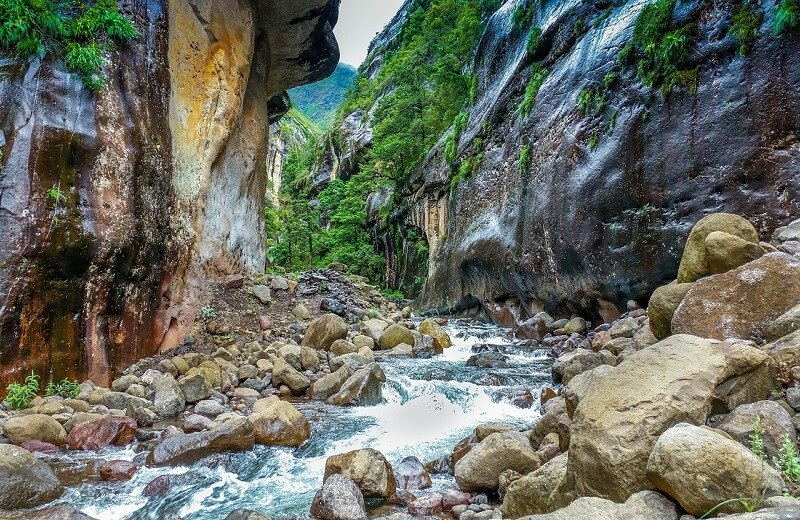
Gudialchay Gorge, also known as the Tengealty Canyon, is a tale told by water through time. This river has flowed here for as long as the mountains themselves have stood. Millennia of its passage have created a natural wonder: a canyon with depths ranging from 400 to 600 meters, where cliff faces rise like giant fortress walls created not by human hands but by nature itself. The gorge's name, translated from Azerbaijani, means something like "the foot of the mountains" or "the base of the cliffs," and this name perfectly captures what travelers witness here.
To reach this gorge, you must travel from Baku approximately two hours by modern highway in a northeastern direction. Along the way, you climb steadily higher into the mountains, watching the landscape change, feeling how the crisp air becomes cleaner and colder with each passing kilometer. And when you finally arrive at the gorge's edge, a view opens before you that makes you forget about the road, about time, about what awaits you in the city.
Two cliff walls, rising hundreds of meters high, form a canyon through whose depths rushes a mountain river. The water here is not merely water—it is music. It sings upon the rocks, jumps from ledge to ledge, creating waterfalls, waterfalls, waterfalls. There are many of them here, each with its own story, its own name, its own admirers.
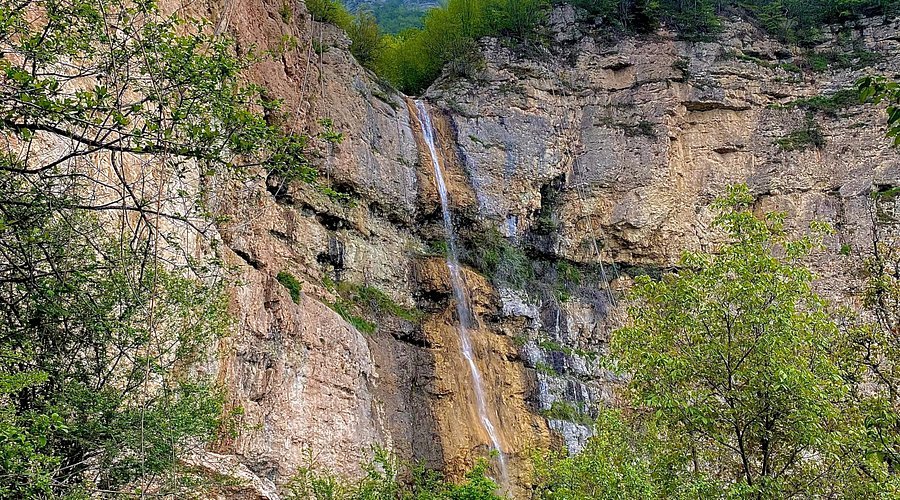
The most famous and highest of these is Afurja Waterfall. This water plunges from a height of approximately 94 meters, creating a spectacular sight. When the sun illuminates this cascade, rainbows appear within it, and it seems as though the water does not fall but floats in the air. Tourists often say that Afurja Waterfall is one of Azerbaijan's highest waterfalls, and upon arriving here, they understand why this place has become a destination for nature lovers. Afurja is a waterfall that must be seen in person, because no photograph can convey the full grandeur of its beauty.
Other waterfalls are less impressive in size but no less interesting. Kinkhirt Waterfall, for example, plunges from a height of about 25 meters, but its crystalline clear waters invite tourists to bathe in their cold embrace. When the summer sun beats down upon the gorge, immersing yourself in this water becomes not just a pleasure but a salvation. There are other waterfalls with names that sound strange to unprepared ears—Pirbanovsha, for instance, where water and time have created whimsical natural sculptures from stone.
The region around Gudialchay is known not only for its waterfalls. The city of Quba, at whose foot the river rushes, is called the "Apple Garden of Azerbaijan." Magnificent apple varieties are cultivated here that cannot be found anywhere else in the country. The climate here is special—at an elevation of 600 meters, where air currents from mountains and plains meet, an ideal environment exists not only for apple trees but for other fruits as well. When you walk through the gorge and see the green of forests interwoven among the cliff faces, you understand why the region has earned this nickname.
The journey into Tengealty Canyon itself is an adventure. Roads here wind along slopes, and views reveal themselves at each turn. Tourists say that being in the canyon means finding yourself alone with nature. There are no loud sounds of civilization here, only the roar of water, the sound of wind in tree leaves, and time flowing just as the Gudialchay River flows.
In summer, temperatures in the gorge are somewhat lower than on the plains, thanks to the shade from towering cliffs and the coolness emanating from the swift water. In spring, when snow melts in the mountain heights, the river becomes more powerful, and the waterfalls are particularly impressive. Autumn here is golden—leaves change color, and the canyon becomes a painting in all shades of yellow, red, and brown.
Trekking into the canyon requires preparation. Roads are difficult in places, especially if you want to get close to the most beautiful waterfalls. It is recommended to wear comfortable shoes with good traction, because the rocks here are slippery, especially after rain. Bring sufficient water with you, though water surrounds you, but drinking directly from the river is risky. Sunscreen is also necessary, because the sun in the mountains reflects off white rocks and can burn unprepared skin.
Gudialchay Gorge is a place where you comprehend nature's scale, where you see how water, over thousands of years, can pierce through stone, how slow but unstoppable movement can create such beauty. It is a place you want to return to, where each visit reveals new details, new waterfalls, new angles of beauty. And it is a place that forever remains in the memory of everyone who has been here.
Comments (0)
Leave a Comment