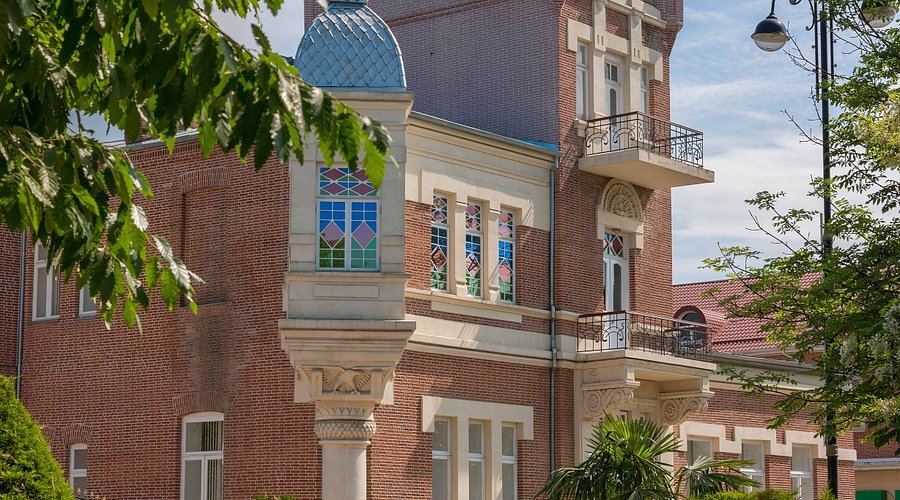
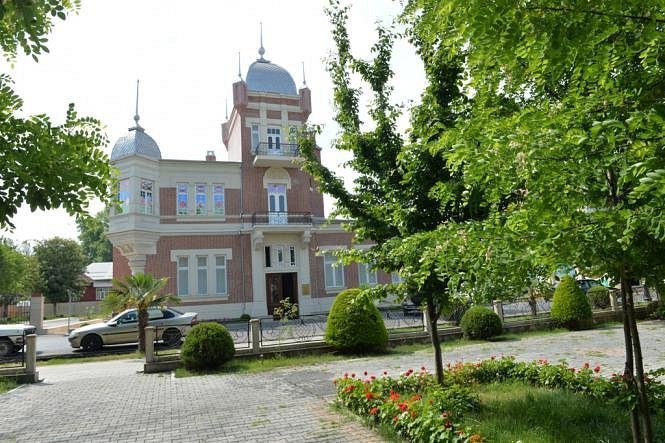
In the center of Lankaran, on Mir Mustafa Khan Street, stands a building that immediately catches your attention. It is white, three-storied, with elegant stained-glass windows and clearly visible traces of European craftsmanship in every detail. This is the Khan Palace — a monument to history, an architectural masterpiece, and, as locals say, a palace of love. The story of its creation is one of how Eastern tradition met Western culture at the edge of the Caspian Sea.
The palace was built in 1912 at the request of Khan Mirahmad, a descendant of the rulers of the Talysh Khanate. Mirahmad was not only a man of power but also a businessman who conducted trade with France and Europe. These connections gave him access to the best architects of Europe. When his wife, Tugra Khanim, won a beauty pageant in the South Caucasus, the Khan decided to build her a palace worthy of her beauty and his love. For this, he invited a French architect who designed the building to combine the best features of European architecture with elements of Azerbaijani and Eastern style.
The construction was ambitious. White and red brick, necessary for building the palace, was brought by sea from Baku and from abroad—at the time, this was a rare luxury, symbolizing status and wealth. Every stone, every element was chosen with special care. The result exceeded all expectations. The building, with its harmonious proportions, contrasting-colored brickwork, and delicate stained glass on the second floor, turned out to be truly unique for a provincial Caucasian city of the late 19th century.
The palace had an area of 812 square meters and contained 12 rooms. But its significance extended far beyond a simple residence. It was the first multi-story building in Lankaran. Before its appearance, the city contained only single-story houses, and the sudden emergence of a three-story palace became an event that shook the conservative way of life in the city. Moreover, this was the first building in Lankaran to have electricity. A private power station was even installed. The first central heating system—modern for the time—also came to Lankaran thanks to this palace. Thus, Tugra Khanim became one of the first women in the South Caucasus to live with electricity, central heating, and all the conveniences that modern European civilization provided.
The architectural language of the palace deserves special attention. The northern and western facades are made of white brick and white stone—light, elegant, almost delicate. The eastern and southern facades, in contrast, are faced with red brick, creating a dynamic, lively contrast. The stained-glass windows on the second-floor windows are not just decoration. They reflect the influence of French Art Nouveau, the dominant artistic movement in European architecture of the early 20th century. These windows let sunlight through in such a way that inside the palace, an atmosphere is created that is difficult to describe—something between a European city palace and an Eastern house.
Life in the palace, however, was not long in its original capacity. Khan Mirahmad died in 1916, just four years after the palace's completion. Tugra Khanim probably spent many years living in these walls alone, surrounded by monuments to the love that her husband once gave her. But history has its own course, and the revolution that came to Azerbaijan in 1917-1920 drastically changed the fate of the palace. The building was nationalized and transformed into a Soviet state institution—first it served Soviet government functions, then housed various organizations.
Throughout the Soviet period, the palace underwent many transformations. Its interior decoration changed, rooms were rebuilt to meet the needs of Soviet institutions. But the building itself, its architecture, its brick walls—all of this survived the Soviet era and has been preserved to this day. It is a monument that refuses to disappear from the city's memory, even when history tries to rewrite it.
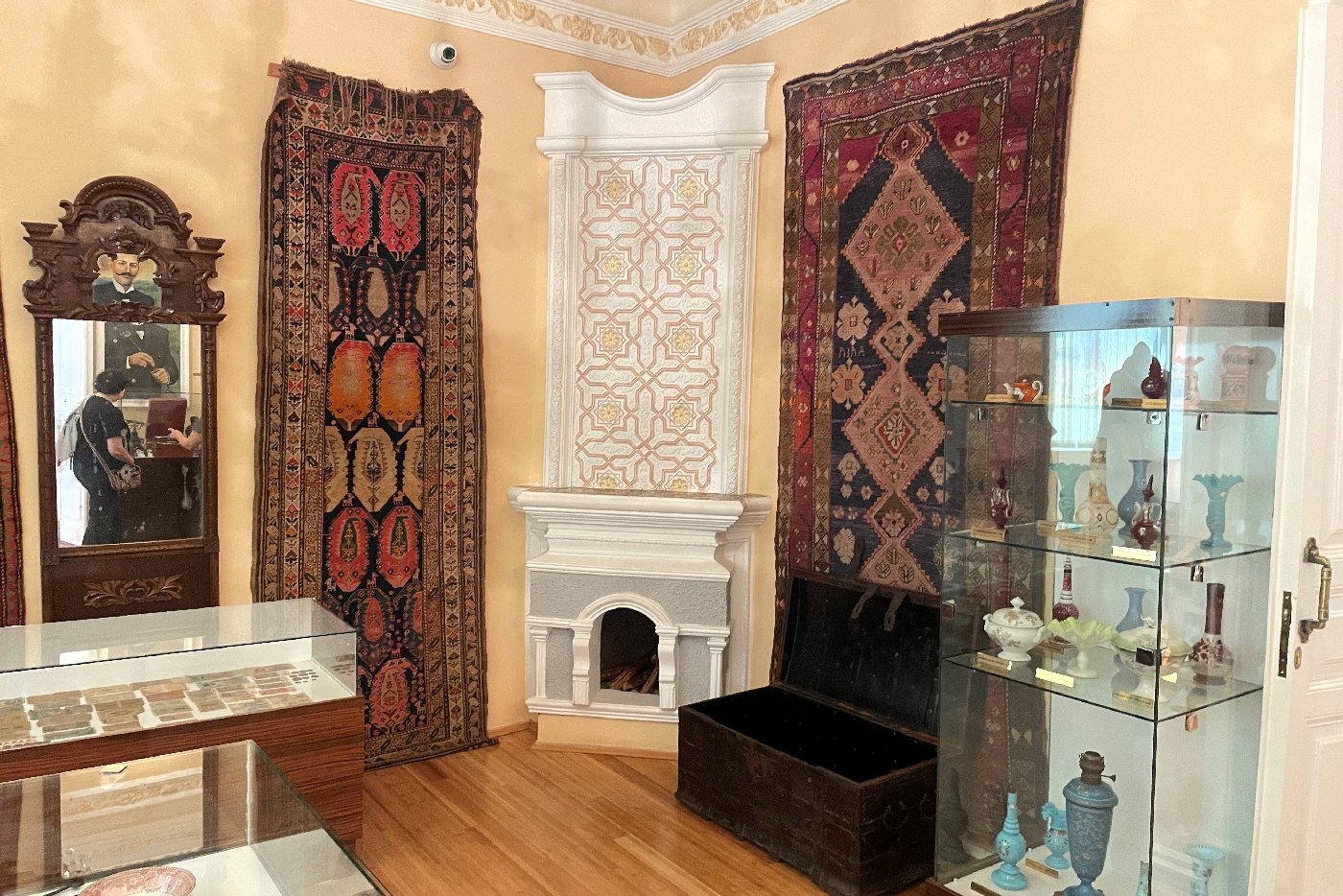
In 1991, when Azerbaijan gained independence, the palace received a new life. A decision was made to house the Lankaran Local History Museum here—a museum dedicated to the history of the city and the region. Today, the palace houses more than 7,000 exhibits related to the history of Lankaran, the Talysh Khanate, and the lives of people who lived in these lands over the centuries. You can see Azerbaijani carpets, traditional clothing, household items, jewelry, weapons, documents, and photographs. Special attention is devoted to an exhibition dedicated to the palace itself—the story of its creation, the life of Khan Mirahmad and his family, and its architecture.
Museum visitors can climb to the second and third floors and see the rooms where the royal family lived. Imagining themselves as guests of the palace a century ago, one can almost hear the sounds of European music that probably played on these floors, feel the atmosphere that the owners of the palace created. The stained-glass windows still let sunlight through in the same way as a hundred years ago, creating the same magical play of light and shadow.
The Khan Palace of Lankaran is not just a museum. It is a witness to history, an architectural monument that tells the story of the meeting of two cultures. This building shows how one man, armed with love, ambitions, and connections to the Western world, was able to create something completely unique in a provincial Caucasian city. It stands in the center of Lankaran as a reminder that architectural beauty can preserve the stories of centuries, and that love, expressed in stone and brick, can outlast the very era in which it was created.
Comments (0)
Leave a Comment